Healthy Charcuterie Board Ideas for Your Next Gathering

Last Updated: July 2026
Charcuterie boards have taken over every party, holiday table, and weeknight appetizer spread, and for good reason. But are charcuterie boards actually healthy? The honest answer: it depends entirely on what goes on the board. A traditional board loaded with cured meats and aged cheeses can be high in sodium and saturated fat. But a healthy charcuterie board built around fresh produce, lean proteins, whole grains, and smart fats is a genuinely nutritious spread that happens to look stunning.
This guide covers 15 healthy charcuterie board ideas, with expanded options for keto, vegan, and low-calorie builds, so you can put together a board that fits any crowd, any dietary need, and any occasion.
Jump to a section ▾
Are Charcuterie Boards Healthy?
Yes, a charcuterie board can absolutely be healthy, and it has a natural advantage over most party foods: it's already built around variety. The key is swapping or reducing the ingredients that work against you (heavily processed meats, high sodium crackers, sugary jams) and leaning into ingredients that work for you (fresh fruit, vegetables, nuts, lean proteins, and whole grain bases).
A well-built healthy charcuterie board can deliver fiber, antioxidants, healthy fats, and lean protein all in one visually impressive spread. The tips and ideas below will show you exactly how to do it.
What Makes a Charcuterie Board Healthy?
Before diving into specific ideas, here's the framework for building a healthy board:
- Lead with produce. Fill at least half the board with fresh or lightly prepared fruits and vegetables. Color equals nutrients.
- Choose whole grain bases. Swap white flour crackers for whole grain, seed-based, or gluten-free options.
- Pick lean proteins. Grilled chicken, shrimp, salmon, and turkey are far healthier than salami or pepperoni.
- Add healthy fats strategically. Nuts, olives, avocado, and hummus provide satisfying fats without the excess sodium of processed meats.
- Watch portion sizes on cheese. Cheese can be part of a healthy board. Aim for smaller amounts of flavorful varieties so a little goes a long way.
- Limit added sugar. Skip the sugary jams and fruit preserves; use fresh fruit instead for natural sweetness.
15 Healthy Charcuterie Board Ideas for Your Next Party
1. Seasonal Fruits and Vegetables
Fresh produce is the foundation of any healthy charcuterie board. It adds color, texture, crunch, and a wide range of vitamins and antioxidants, all with minimal calories.
Fruits to include: Sliced apples, pears, grapes, strawberries, blueberries, and raspberries work year-round. In summer, try fresh peach slices or watermelon cubes. In fall and winter, add pomegranate arils or persimmon slices for something unexpected.
Vegetables to include: Bell pepper strips (red, orange, and yellow for color), baby carrots, cucumber rounds, celery sticks, cherry tomatoes, and sugar snap peas. Arrange them in small clusters or fan patterns to make the board visually interesting.
Pro tip: Buy organic when possible, especially for items on the EWG's Dirty Dozen list like strawberries, bell peppers, and grapes.

2. Nuts and Seeds
Nuts and seeds are one of the most nutritious additions you can make to a healthy charcuterie board. They're rich in fiber, plant-based protein, and heart-healthy unsaturated fats, and they add a satisfying crunch that balances softer ingredients.
Best nuts for a charcuterie board: Almonds, walnuts, cashews, pistachios, and pecans. Raw or lightly roasted (unsalted) versions keep sodium in check.
Seeds worth adding: Pumpkin seeds (pepitas), sunflower seeds, and hemp seeds can be scattered across the board or served in a small ramekin alongside other dips.
Flavor boost: Toss nuts in a small amount of olive oil and season with rosemary, smoked paprika, or a pinch of cayenne before roasting at 350°F for 8 to 10 minutes. They'll be far better than anything from a bag.

3. Whole Grain Crackers and Seeded Bread
The base is what most people reach for first, so make it count. Whole grain crackers provide fiber, complex carbohydrates, and a more satisfying crunch than their refined counterparts.
Cracker options: Look for whole wheat pita chips, multigrain flatbreads, seed crackers (flax, chia, sesame), or brown rice crackers for a gluten-free option. Mary's Gone Crackers, Simple Mills, and Wasa are great store brands to look for.
Bread options: Sliced sourdough (which has a lower glycemic impact due to fermentation), whole grain baguette, or homemade whole wheat focaccia served warm make excellent additions. Cut into small pieces so guests aren't tempted to overserve themselves.

4. Lighter Cheese Options
Cheese doesn't have to be off the table. You just need to be strategic. The key is choosing smaller amounts of flavorful cheeses so guests get great taste without going overboard, and leaning toward naturally lower-fat options.
Healthier cheese choices:
- Fresh mozzarella: lower in sodium and fat than aged varieties
- Goat cheese (chèvre): easier to digest and lower in fat than most cow's milk cheeses
- Feta: strong, salty flavor means a little goes a long way; contains probiotics
- Ricotta: creamy, mild, and lower in fat; great for spreading on crackers
- Part-skim mozzarella: solid all-purpose option with less saturated fat
Serve smart: Pre-slice or pre-cube cheese to encourage reasonable portion sizes. Pair a bold cheese like feta with mild crackers and fresh fruit so guests get full flavor with less cheese.

5. Hummus and Veggie Dips
Hummus is a charcuterie board staple for good reason: it's packed with plant-based protein, fiber, and healthy fats from chickpeas and olive oil, and it pairs with nearly everything on the board. It also serves double duty as a spread for crackers and a dip for vegetables.
Hummus variations to try: Classic, roasted red pepper, roasted garlic, beet, or lemon-herb. Offering two or three flavors in small ramekins adds variety and visual appeal.
Other healthy dips: Tzatziki (Greek yogurt-based, high in protein), white bean dip, baba ganoush (eggplant-based), or a simple olive oil and herb dip.
Tip: Drizzle your hummus with a thread of high-quality extra virgin olive oil and a pinch of za'atar or smoked paprika before serving. It looks beautiful and tastes even better.

6. Olives
Olives are one of the most nutrient-dense ingredients you can add to a healthy charcuterie board. They're an excellent source of vitamin E, heart-healthy monounsaturated fats, and powerful antioxidants, the same compounds found in extra virgin olive oil.
Best olives for a board: Castelvetrano (mild, buttery), Kalamata (bold, briny), Cerignola (large, firm), or a marinated olive mix. Serve them in a small bowl to contain the brine.
Health note: Olives are naturally higher in sodium due to the curing process, so if you're building a low-sodium board, rinse them briefly before serving or use them sparingly.

7. Sun-Dried Tomatoes
Sun-dried tomatoes are a small but mighty addition to any healthy charcuterie board. They're intensely flavored, so a small amount goes a long way, and they're packed with lycopene (a powerful antioxidant), vitamin C, and potassium.
How to use them: Buy oil-packed sun-dried tomatoes, drain them, and arrange in a small cluster on the board. They pair especially well with goat cheese, fresh mozzarella, and whole grain crackers. You can also julienne them and scatter across the board as a garnish.
Make your own: Slice roma tomatoes thin, toss with olive oil and sea salt, and bake at 250°F for 2 to 3 hours until concentrated and chewy. Far better than store-bought and no preservatives.

8. Caprese Skewers
Caprese skewers are one of the most crowd-pleasing, visually striking additions to a healthy charcuterie board, and they take about five minutes to assemble.
How to make them: Thread one cherry tomato, one small fresh basil leaf (folded), and one mini fresh mozzarella ball (bocconcini) onto a small skewer or toothpick. Lay them across the board in a row. Just before serving, drizzle lightly with balsamic glaze and a pinch of flaky sea salt and cracked black pepper.
Variation: Add a small piece of prosciutto to each skewer if you want to include a lean meat component, or swap the mozzarella for a cube of watermelon in summer for a refreshing twist.

9. Grilled Peppers
Grilled peppers add warmth, smokiness, and a pop of color that raw peppers just can't match. They're low in calories, high in vitamin C (especially red peppers, which have more vitamin C than an orange), and pair beautifully with cheese and crackers.
How to prepare them: Slice bell peppers into strips, toss with olive oil and a pinch of salt, and grill over medium-low heat for 4 to 5 minutes per side until softened and lightly charred. Let them cool before placing on the board. You can also use a broiler or grill pan if you don't have an outdoor grill.
Try: A mix of red, orange, and yellow peppers for variety, or add mild shishito peppers for something slightly different.

10. Cucumber Rolls
Cucumber rolls are a creative, low-carb alternative to crackers that add a fresh, satisfying crunch to any healthy charcuterie board. They're easy to make and look elegant without any real effort.
How to make them: Use a vegetable peeler or mandoline to slice a cucumber into long, thin ribbons. Lay each ribbon flat, spread with a thin layer of whipped cream cheese, herbed goat cheese, or hummus. Add a pinch of fresh dill or chives, then roll each ribbon tightly and secure with a toothpick. Stand them upright in a small cluster on the board.
Fillings to try: Smoked salmon with cream cheese and dill, roasted red pepper hummus with feta, or herbed ricotta with sun-dried tomato.

11. Grilled Chicken Skewers
Adding a lean protein to your healthy charcuterie board makes it a more complete, satisfying spread, and grilled chicken skewers are the easiest way to do it. They're high in protein, low in fat, and easy to eat in one or two bites.
How to make them: Cut chicken breast into 1-inch cubes. Marinate for at least 30 minutes in olive oil, lemon juice, garlic, and your choice of herbs (oregano, rosemary, thyme, or za'atar all work well). Thread onto small skewers and grill or bake at 400°F until cooked through, about 15 to 18 minutes. Let cool slightly before placing on the board.
Serve with: A small bowl of tzatziki or hummus for dipping alongside the skewers.

12. Salmon Bites
Salmon is one of the healthiest proteins you can put on a charcuterie board. It's loaded with omega-3 fatty acids, which support heart and brain health, and it's an excellent source of lean protein. Both fresh-cooked and smoked salmon work beautifully.
Fresh salmon bites: Dice cooked salmon fillet into bite-sized pieces and season with lemon zest, dill, capers, and a pinch of flaky salt. Serve on cucumber rounds or whole grain crackers with a dollop of cream cheese or crème fraîche.
Smoked salmon: Fold thin slices of cold smoked salmon and arrange alongside cucumber rounds, capers, red onion, and a small bowl of whipped cream cheese. This combination is classic, easy, and always a hit.

13. Shrimp Cocktail
Shrimp cocktail is an elegant, protein-packed addition to a healthy charcuterie board. Shrimp are naturally low in calories (about 84 calories per 3 oz) and high in protein, making them one of the best lean proteins for an appetizer spread.
Quick prep: Use pre-cooked, peeled, and deveined shrimp. Just thaw and arrange. For homemade, boil shrimp in seasoned water (Old Bay, lemon, garlic) for 2 to 3 minutes until pink, then transfer immediately to an ice bath to stop cooking. Serve chilled with a small bowl of cocktail sauce or a lemon-herb aioli.
Board tip: Hang the shrimp over the edge of a small bowl or ramekin of cocktail sauce so they're easy to grab and the presentation looks polished.

14. Antipasto Elements
Antipasto (Italian for "before the meal") is a natural fit for a healthy charcuterie board. Traditional antipasto includes marinated vegetables, olives, and selective cured meats. For a healthier take, focus on the vegetable and marinated components and use cured meats sparingly as an accent rather than the centerpiece.
Healthy antipasto additions:
- Marinated artichoke hearts (high in fiber and antioxidants)
- Roasted red peppers packed in water or light oil
- Marinated mushrooms
- Pepperoncini or mild pickled peppers
- A few slices of prosciutto di Parma (leaner than salami or pepperoni)
- Fresh Parmigiano-Reggiano, intensely flavored, so a small amount satisfies

15. Dark Chocolate and Almonds
Every great board needs a touch of indulgence, and dark chocolate with almonds is one you can feel good about. Dark chocolate (70% cacao or higher) is rich in antioxidants, particularly flavonoids, and has been shown to support heart health in moderation. Paired with almonds, you get a satisfying combination of crunch, sweetness, and healthy fat.
How to serve: Break dark chocolate into rough pieces and scatter alongside whole or chocolate-covered almonds in a corner of the board. Add a few dried cherries or fresh raspberries nearby for a natural pairing.
Tip: Look for dark chocolate with minimal added sugar and no artificial ingredients. Brands like Hu, Endangered Species, and Alter Eco are widely available and use cleaner ingredients.

Healthy Charcuterie Board Ideas by Diet
Not everyone at your gathering eats the same way. Here's how to adapt your healthy charcuterie board for three common dietary needs:
Keto Healthy Charcuterie Board
Focus on high-fat, low-carb ingredients. Skip the crackers and bread entirely and load up on:
- Full-fat cheeses (aged cheddar, brie, gouda)
- Cured meats (salami, prosciutto, pepperoni) in moderation
- Olives, avocado slices, and nuts (almonds, pecans, macadamias)
- Hard-boiled eggs or deviled eggs
- Non-starchy vegetables: cucumber, celery, bell peppers, broccoli
- Berries (strawberries and raspberries are lowest in carbs)
Vegan Healthy Charcuterie Board
A fully plant-based board is naturally high in fiber and antioxidants. Build it around:
- Hummus, baba ganoush, and white bean dip
- A wide variety of seasonal fruits and vegetables
- Nuts, seeds, and nut butters (almond butter pairs beautifully with apple slices)
- Olives and marinated vegetables
- Whole grain and seed-based crackers
- Vegan cheese alternatives (cashew-based brie, almond-milk ricotta)
- Dark chocolate (check the label, as many 70%+ bars are dairy-free)
Low-Calorie Healthy Charcuterie Board
Keep calories in check without sacrificing volume or variety:
- Fill two-thirds of the board with non-starchy vegetables and low-calorie fruits
- Use light cream cheese or Greek yogurt dip instead of full-fat versions
- Choose shrimp or chicken over higher-calorie cured meats
- Keep cheese to 1 to 2 small varieties and pre-portion into small cubes
- Use rice crackers or cucumber rounds instead of bread or high-calorie crackers
- Skip nuts if calories are very tight, or offer a small, portioned side dish
What Is the Healthiest Meat for a Charcuterie Board?
Traditional charcuterie is built around cured, processed meats like salami, pepperoni, and pâté, which tend to be high in sodium, saturated fat, and preservatives. If you want to include meat on a healthy board, here are the best options ranked from healthiest to most indulgent:
- Grilled chicken breast: Lean, high in protein, no added sodium or preservatives. Best served as skewers (see idea #11 above).
- Shrimp: Very low in calories and fat, high in protein. Easy to prep ahead and serve chilled.
- Smoked salmon or fresh salmon: Excellent source of omega-3s. Higher in healthy fat but nutritionally superior to cured meats.
- Sliced turkey breast: Look for low-sodium, minimally processed deli turkey or use sliced leftover roast turkey.
- Prosciutto di Parma: If you want a traditional cured meat, prosciutto is one of the leaner options. Use it as an accent, 2 to 3 thin slices per person, rather than a centerpiece.
What to limit or avoid: Pepperoni, salami, soppressata, and other heavily processed cured meats are high in sodium, saturated fat, and often contain nitrates. They're fine occasionally but shouldn't be the focus of a healthy board.
Tips for Building a Healthy Charcuterie Board
- Start with produce, fill in from there. Place your vegetables and fruits first, as they should take up the most space. Then add proteins, dips, cheese, and crackers around them.
- Use the 50/30/20 rule. Aim for 50% fresh produce, 30% protein and healthy fats (nuts, dips, lean meats), and 20% bases (crackers, bread) and indulgences (cheese, chocolate).
- Pre-portion higher-calorie items. Put nuts, cheese, and chocolate in small ramekins rather than leaving them loose on the board. People tend to eat far less when they have to "scoop" rather than grab.
- Balance flavors and textures. Every great board has something crunchy, something creamy, something salty, something sweet, and something fresh. Use that checklist when you're assembling.
- Go light on sodium throughout. Many charcuterie staples like olives, pickles, cured meats, and certain cheeses are already salty. Compensate by using unsalted nuts, plain vegetables, and low-sodium crackers to balance the board.
- Label dietary-specific items. If you're hosting guests with dietary restrictions, small label cards next to each item make a huge difference. It also looks very polished.
The Right Board Makes All the Difference
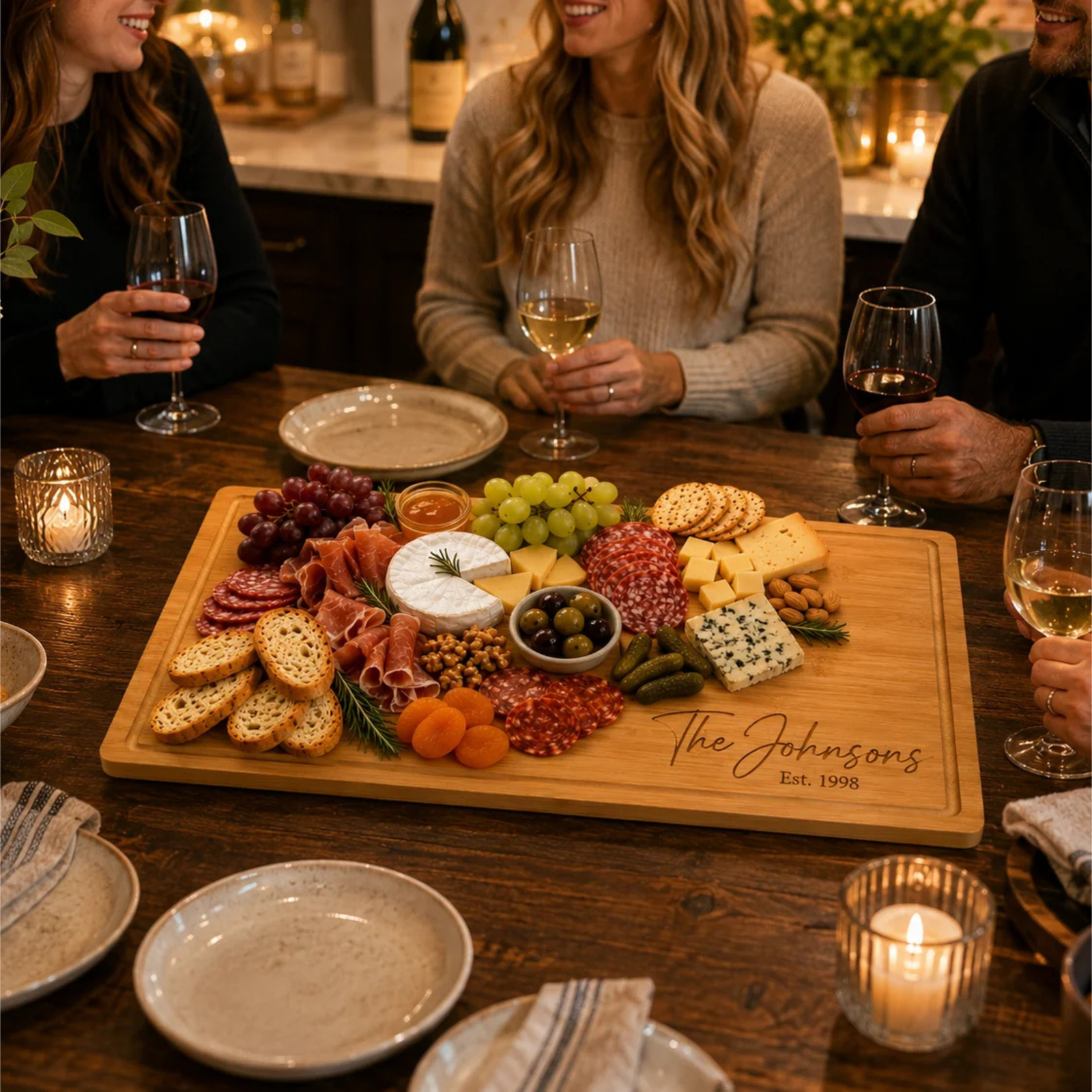
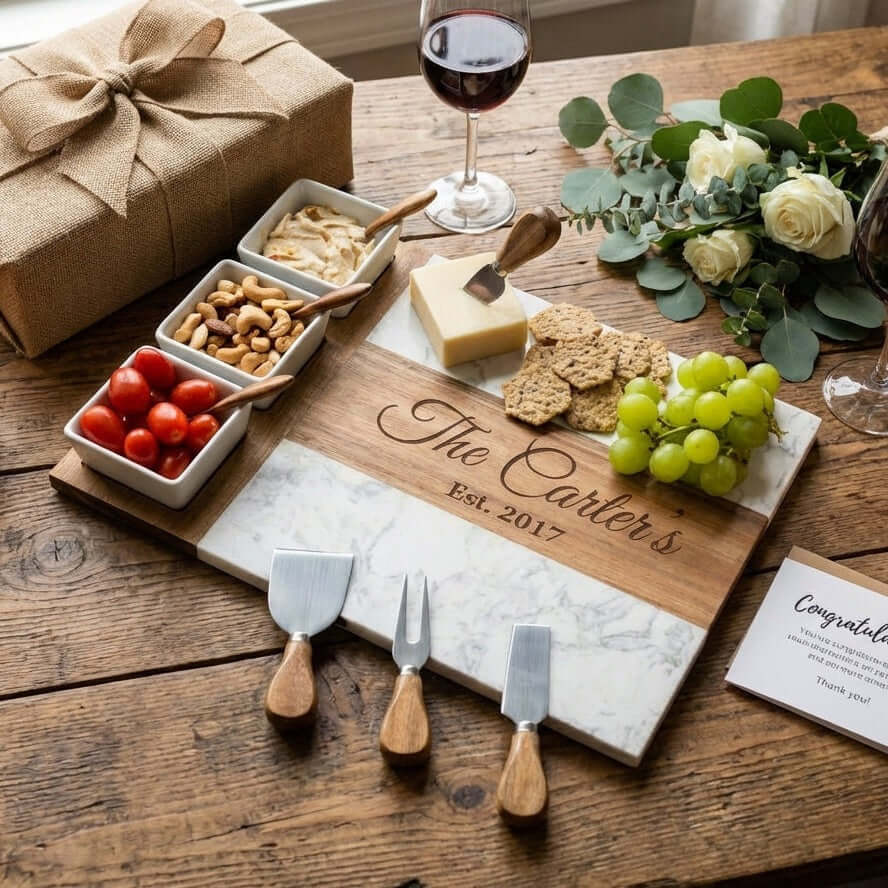
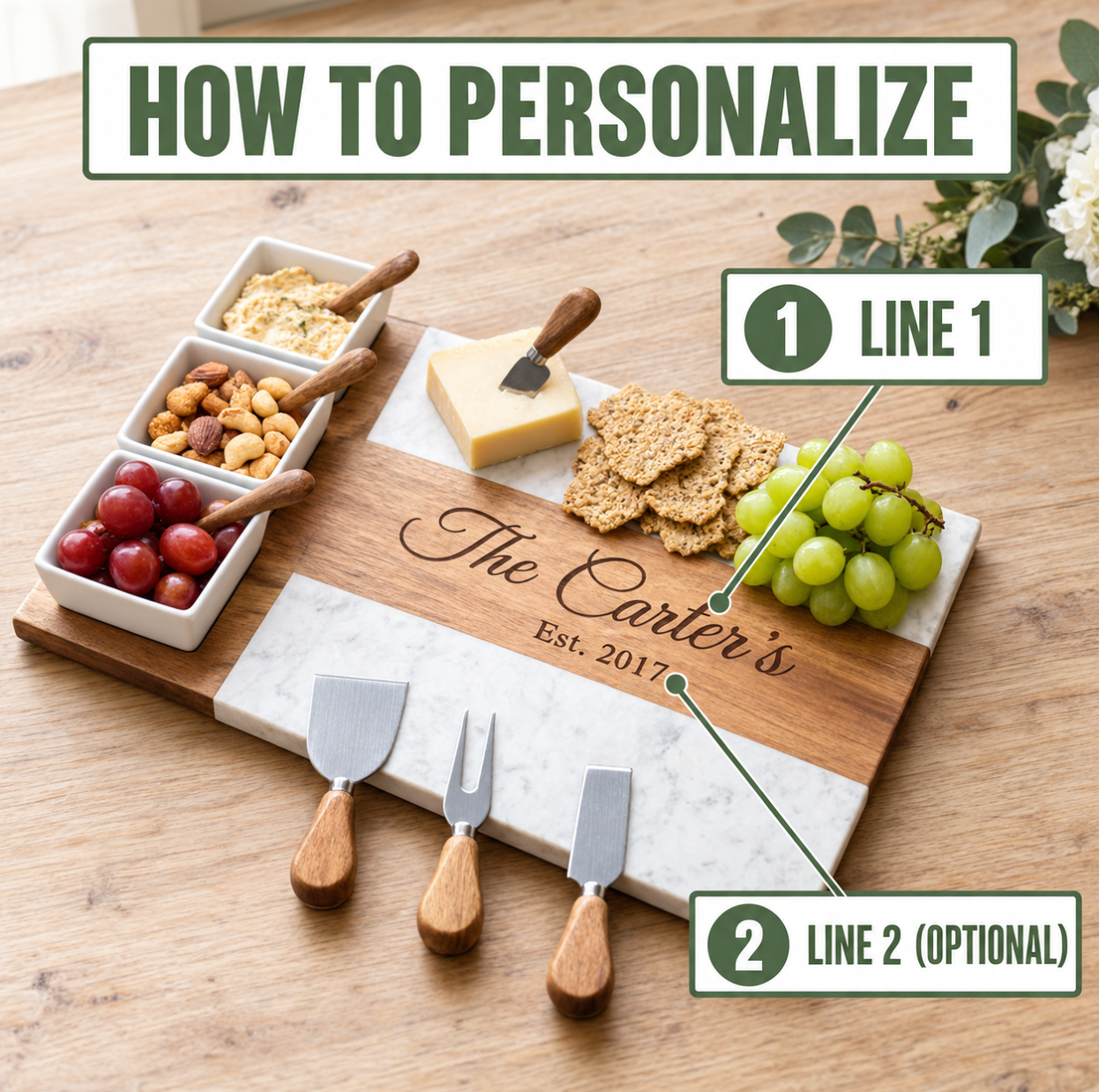
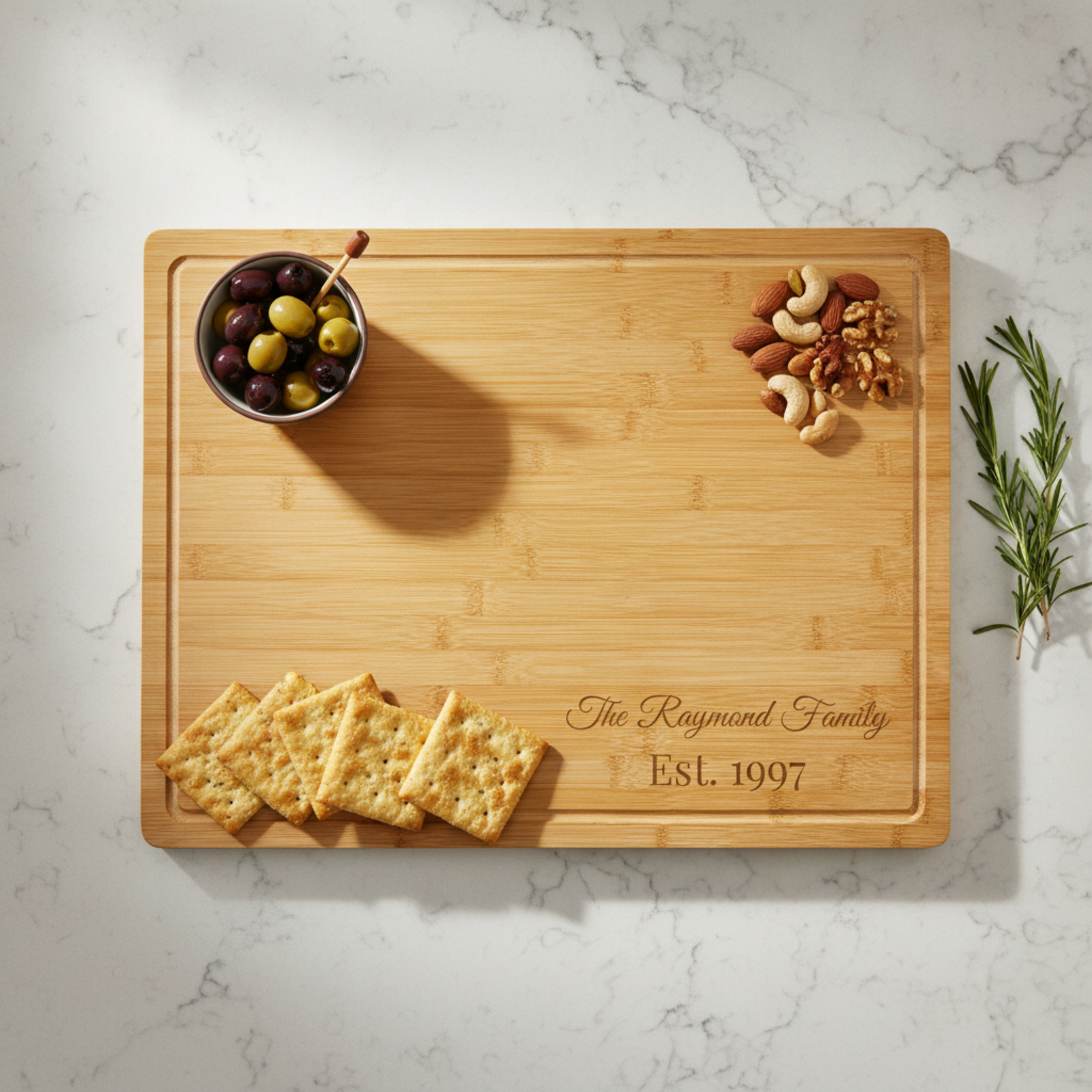
A beautiful, healthy spread deserves a beautiful board to live on. Our personalized charcuterie boards are made from premium wood and laser-engraved with a name, monogram, or message, the kind of piece that gets pulled out every gathering and becomes part of the story.
Shop Personalized Charcuterie Boards →

Willow & Hive Team
Colin Raymond is part of the team at Willow & Hive, the shop for personalized gifts for the home. He holds an undergraduate degree from the University of Connecticut and brings a lifelong competitive streak from golf and hockey to his work. Every board in this guide ships from the Willow & Hive fulfillment center in Monroe, Connecticut, where each order is personalized and shipped by hand.
Frequently asked questions
Are charcuterie boards healthy?
Yes, a charcuterie board can be very healthy. It depends on the ingredients. Boards built around fresh fruits, vegetables, lean proteins (chicken, shrimp, salmon), nuts, and whole grain bases are nutritious and balanced. Traditional boards heavy in cured meats and processed cheeses are higher in sodium and saturated fat. The ideas in this guide are designed to maximize nutrition without sacrificing flavor.
What is the healthiest meat for a charcuterie board?
Grilled chicken breast, shrimp, and smoked or fresh salmon are the healthiest meat choices for a charcuterie board. They are high in protein, lower in saturated fat, and free from the preservatives and excess sodium found in cured meats like salami or pepperoni. If you prefer a traditional cured meat, prosciutto di Parma is one of the leaner options.
What are 5 things to avoid on a charcuterie board?
For a healthier board, limit or avoid: heavily processed cured meats like pepperoni and salami, which are high in sodium and preservatives; sugary jams and fruit spreads with added sugar; white flour crackers with low nutritional value; processed cheese spreads or cheese products; and sweetened dried fruits like sweetened cranberries or yogurt-covered raisins, which are often high in added sugar.
What is the 3-3-3 rule for charcuterie?
The 3-3-3 rule for charcuterie is a simple framework for building a balanced, visually appealing board: choose 3 meats, 3 cheeses, and 3 accompaniments, such as crackers, fruits, nuts, dips, or jams. It's a helpful starting point for beginners. For a healthier board, adapt it to 3 produce items, 3 lean proteins or dips, and 3 whole grain or low calorie bases.
How many calories is a healthy charcuterie board?
A healthy charcuterie board serving (a reasonable appetizer portion) typically ranges from 200 to 400 calories per person, depending on the ingredients. A board heavy in nuts, cheese, and cured meats can easily exceed 600 calories per serving. To keep it on the lighter end, fill the majority of the board with non-starchy vegetables, use dips like hummus over high-fat spreads, and keep cheese and nuts in small, portioned amounts.
Can a charcuterie board be vegetarian or vegan?
Absolutely. A vegetarian charcuterie board is easy to build and often more colorful and nutritious than a traditional board. Focus on a variety of fresh and marinated vegetables, fruits, hummus and plant-based dips, whole grain crackers, nuts and seeds, and quality cheese. For a fully vegan board, swap cheese for cashew-based or almond-based alternatives and verify that your dark chocolate is dairy-free.
Keep Reading


More from Willow & Hive
© 2026 Willow & Hive · 484 Pepper St, Unit A, Monroe, CT 06468 · willowhive.com
Also in Charcuterie Board Ideas
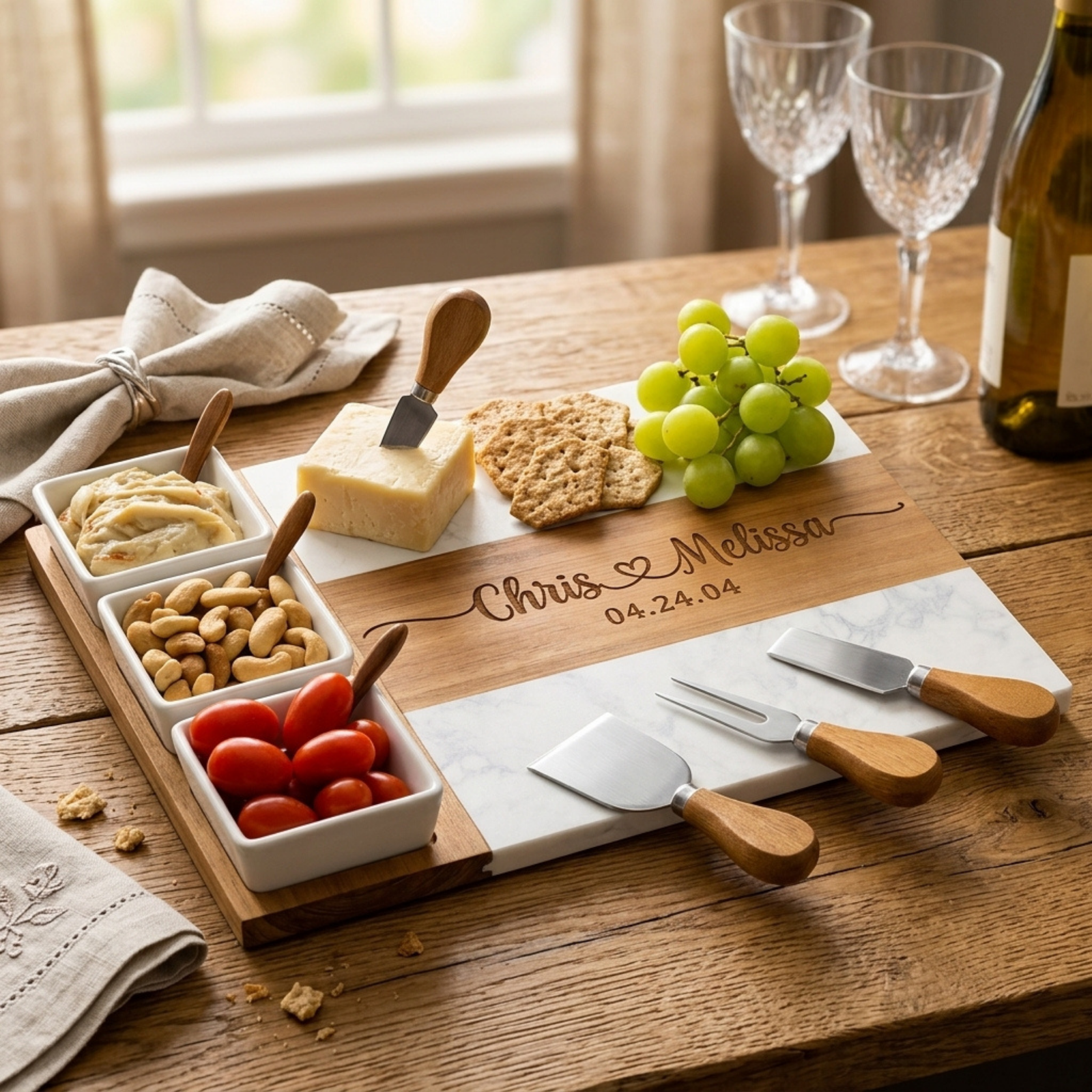

23 Breakfast and Brunch Charcuterie Board Ideas for Every Kind of Morning
Twenty one breakfast and brunch charcuterie board ideas, from family-style spreads and mimosa bars to make-ahead tips and a full price guide. Real personalized boards from Willow & Hive included in every occasion.
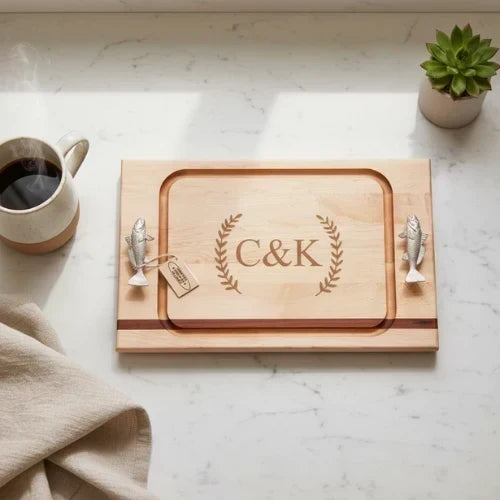

How to Clean a Cutting Board (and Keep It Oiled the Right Way)
Wash it wrong and a wood board warps. Oil it wrong and it turns rancid. Here's the actual routine for cleaning and oiling a cutting board, plus what changes if yours is engraved or a marble-and-wood combination piece.