How to Clean a Cutting Board (and Keep It Oiled the Right Way)

How to Clean a Cutting Board (and Keep It Oiled the Right Way)
A good wood or bamboo cutting board can last for decades, but only if it gets washed and oiled the right way. Wash it wrong and the wood warps or cracks. Oil it with the wrong product and it turns rancid on you. This guide walks through the actual steps, in the order you would do them, plus the two things most care guides never mention: what to do differently if your board is engraved, and what to do if it is a marble and wood combination piece.
Jump to a section ▾
How do you clean a cutting board?
Wash a cutting board by hand with hot water and a small amount of mild, unscented dish soap, scrubbing both faces and the edges with a sponge or brush. Rinse thoroughly, dry it right away with a towel, then stand it on its edge so air reaches both sides evenly while it finishes drying.
Never run a wood or bamboo board through the dishwasher, and never let it soak or sit submerged in the sink. The heat and prolonged water exposure pull moisture into the wood fibers unevenly, which is exactly what causes warping, cracking, and split glue seams on butcher blocks over time. A quick hand wash, done every time, is what actually protects the board.
How do you get stains and odors out of a cutting board?
Scrub a stained spot with a paste of baking soda and a little water, let it sit for a few minutes, then rinse and dry as usual. For lingering smells, rub the surface with the cut side of a lemon or a scoop of coarse salt, let it sit for five minutes, then rinse and dry.
Skip the bleach and skip straight vinegar as a disinfectant: vinegar is not registered by the EPA as an effective sanitizer, so it is better used for odor freshening than for actual disinfection. If a board is used for raw meat, keep a separate one for produce and bread rather than relying on any cleaning method to fully sanitize a porous wood surface.
Why does a wood cutting board need to be oiled?
Wood and bamboo are porous, and every wash pulls moisture and natural oils out of the fibers. Without replacing them, the wood dries out, and it can crack, warp, or splinter over time. A periodic coat of food-safe oil reconditions the wood, slows how much water soaks in during the next wash, and keeps the surface smooth instead of rough.
What is the best oil for a cutting board?
The best choice is a food-grade mineral oil, which the FDA recognizes as safe for direct food contact under 21 CFR 178.3620. It is odorless, colorless, inexpensive, and it never goes rancid the way a cooking oil does. A board butter blend of mineral oil and beeswax works well too, and adds a bit more water resistance on top.
| Oil type | Safe for long-term use | Notes |
|---|---|---|
| Food-grade mineral oil | Yes | Odorless, inexpensive, the standard choice |
| Board butter (mineral oil and beeswax) | Yes | Adds extra water resistance, good for a deeper condition |
| Olive oil | No | Turns rancid, leaves a sour smell within weeks |
| Vegetable or canola oil | No | Same rancidity problem as olive oil |
| Regular coconut oil | No | Also goes rancid; only fractionated coconut oil is safe |
| Walnut oil | Caution | Food-safe but avoid it if anyone using the board has a nut allergy |
How do you oil a cutting board step by step?
Start with a clean, fully dry board. Pour a tablespoon or two of food-grade mineral oil onto the surface, then rub it into the wood in slow circular motions with a soft cloth, working the edges and end grain too. Wipe away the excess, then let the board sit undisturbed, ideally overnight, so the oil fully absorbs before its next use.
- Wash and completely dry the board. Any leftover moisture will trap under the oil.
- Pour a small amount of food-grade mineral oil directly onto the surface.
- Rub it in with a clean, soft cloth or paper towel, covering the top, bottom, edges, and end grain.
- Let it sit for 15 to 20 minutes, then wipe away any oil the wood did not absorb.
- Let the board air dry, standing on its edge, for several hours or overnight before using it again.
How often should you oil a cutting board?
How often depends on how much the board actually gets used. A board that sees daily use benefits from a fresh coat of oil about once a month, while an occasional-use board only needs it every few months. The simplest test: if water no longer beads on the surface and instead soaks in right away, it is time to oil it again.
How do you care for a personalized Willow & Hive board?
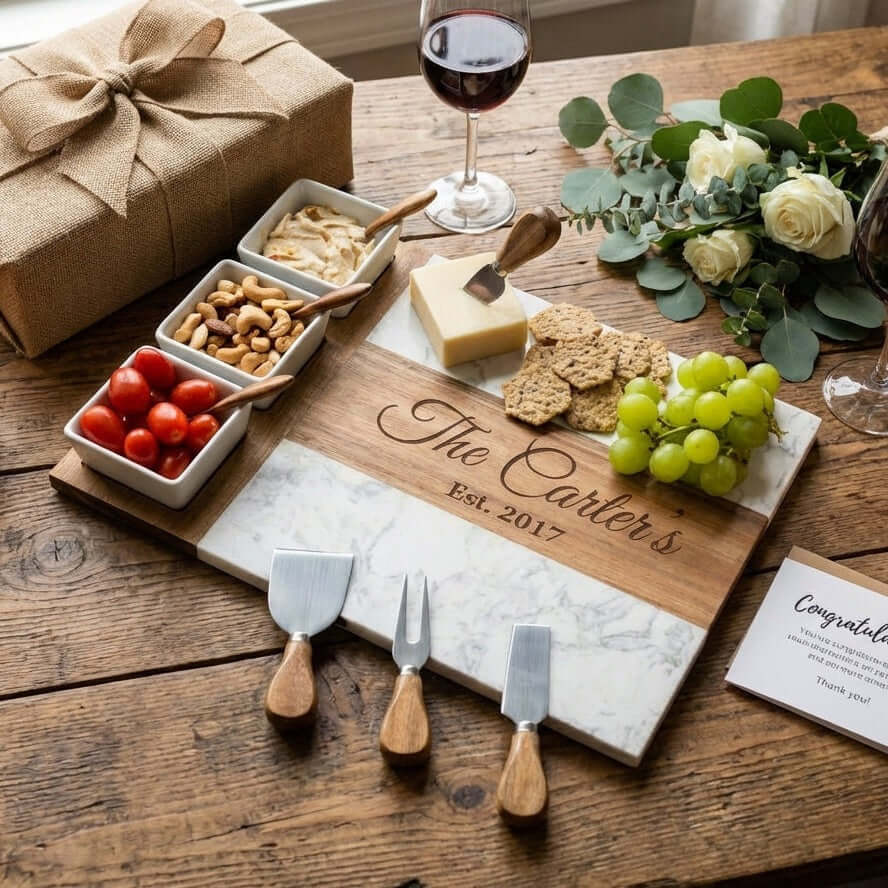
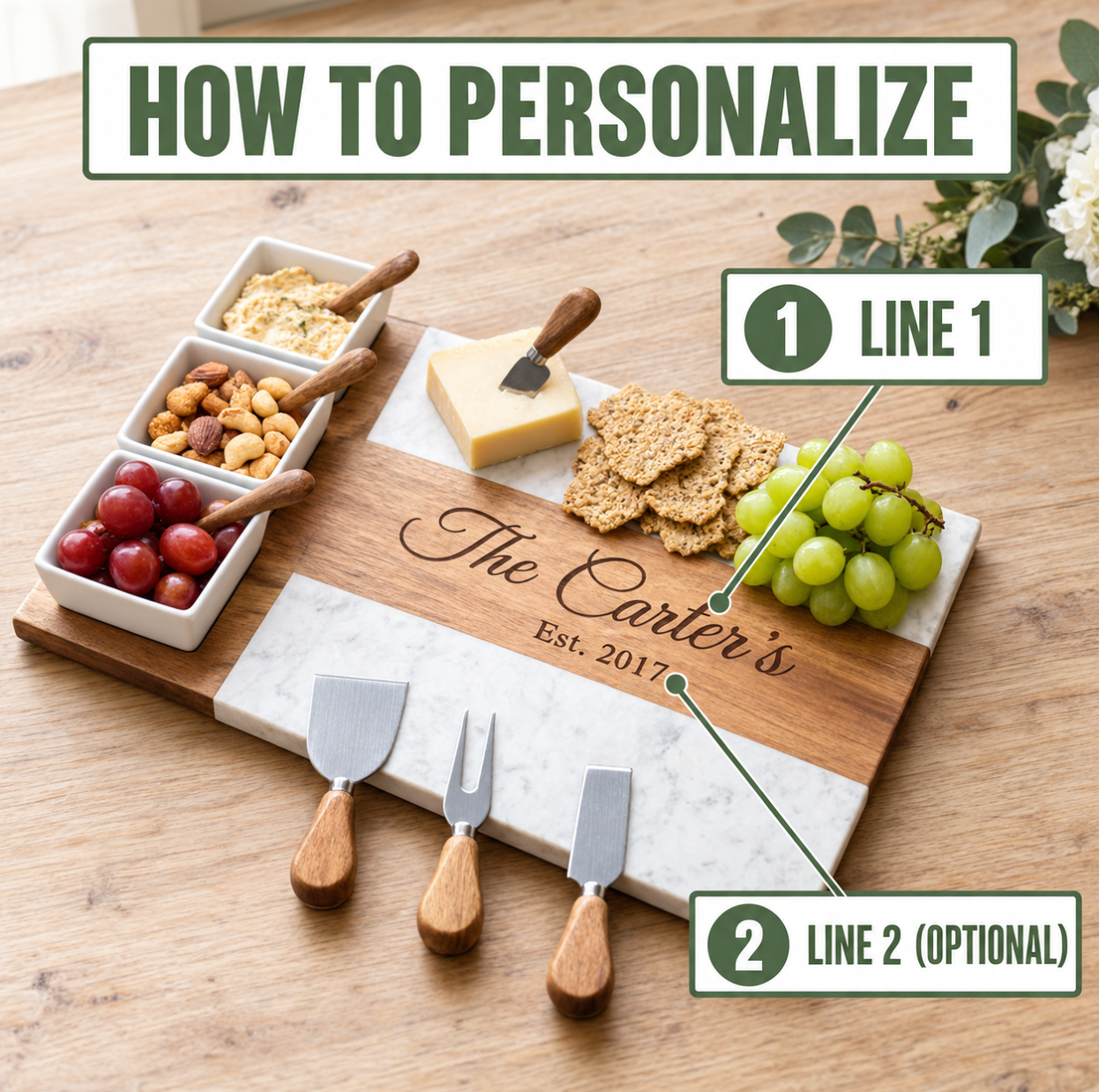
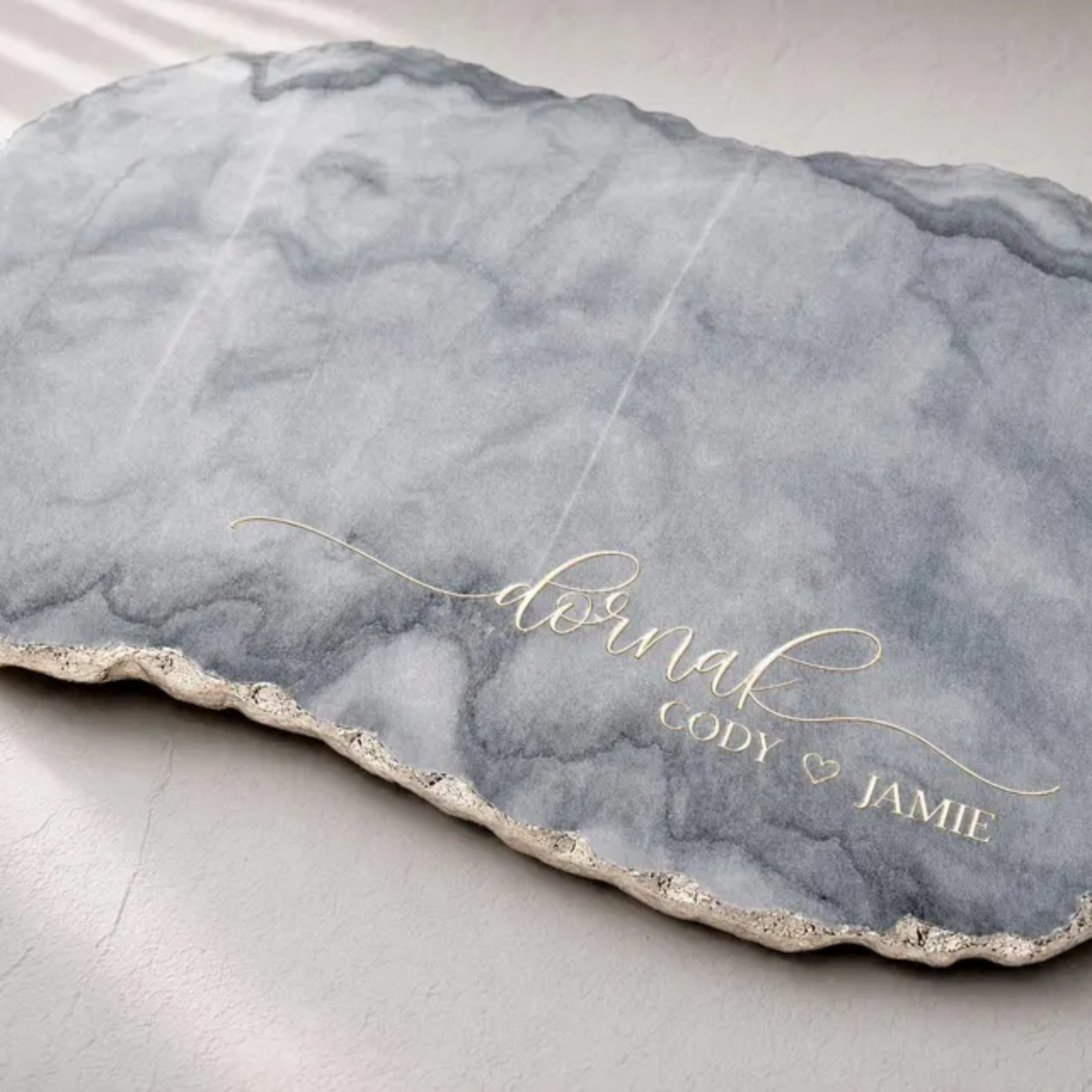
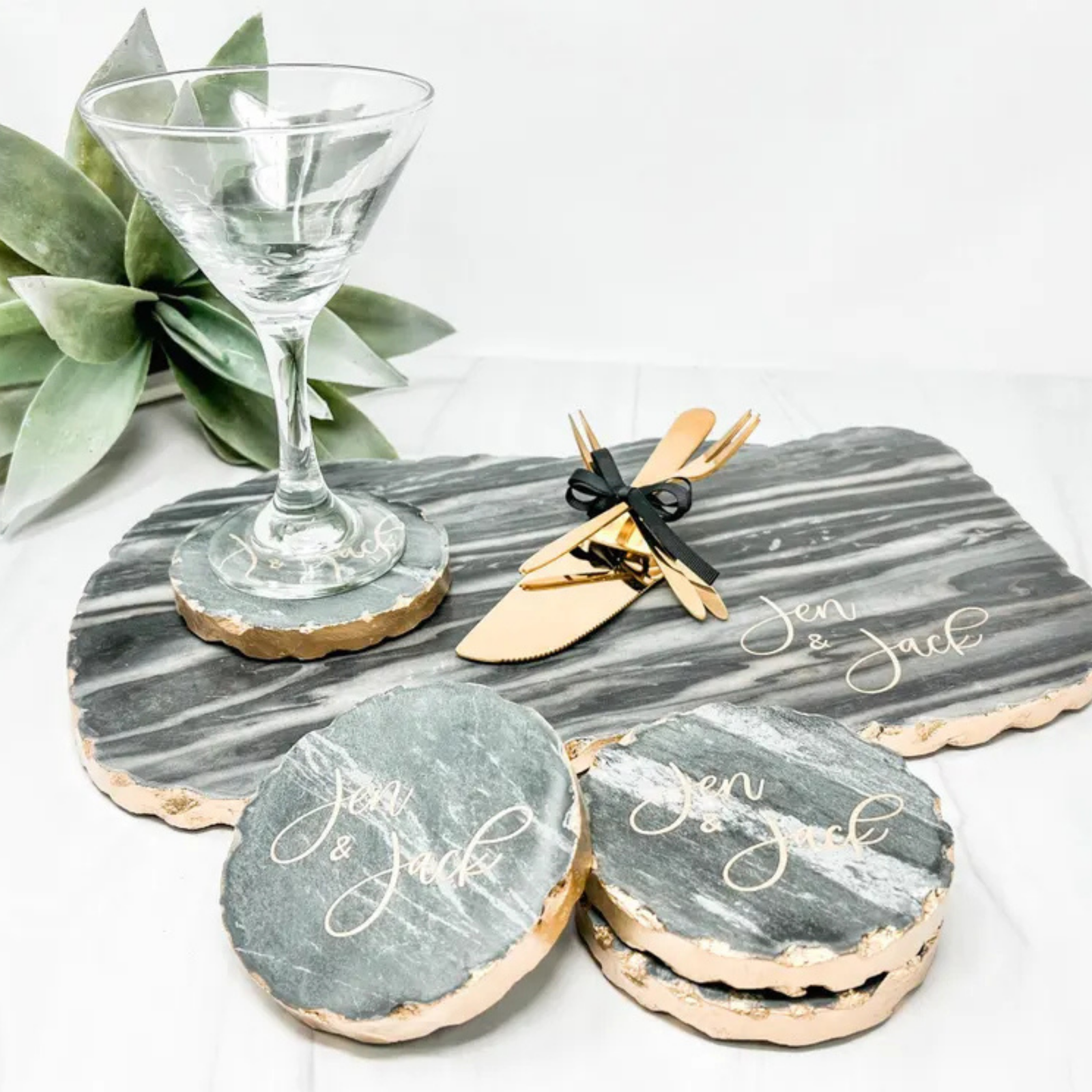
A laser-engraved design is burned into the wood grain itself, so normal hand washing and oiling will not fade, lift, or wash it away. Marble and wood combination boards need a slightly different approach: wipe the marble side clean with a damp cloth and mild soap, and only apply oil to the acacia wood band, never the marble surface itself.
Every board below is made from real wood or bamboo, so the same washing and oiling routine above applies. Treat the routine as part of owning the piece, not an inconvenience. It is what keeps an engraved name or logo looking sharp for years instead of months.
Custom Logo Bamboo Cutting Board
Sustainable bamboo engraved with a company logo or family name, in two sizes. Bamboo is porous like hardwood, so it benefits from the same monthly oiling as a maple or walnut board.
Shop Now →
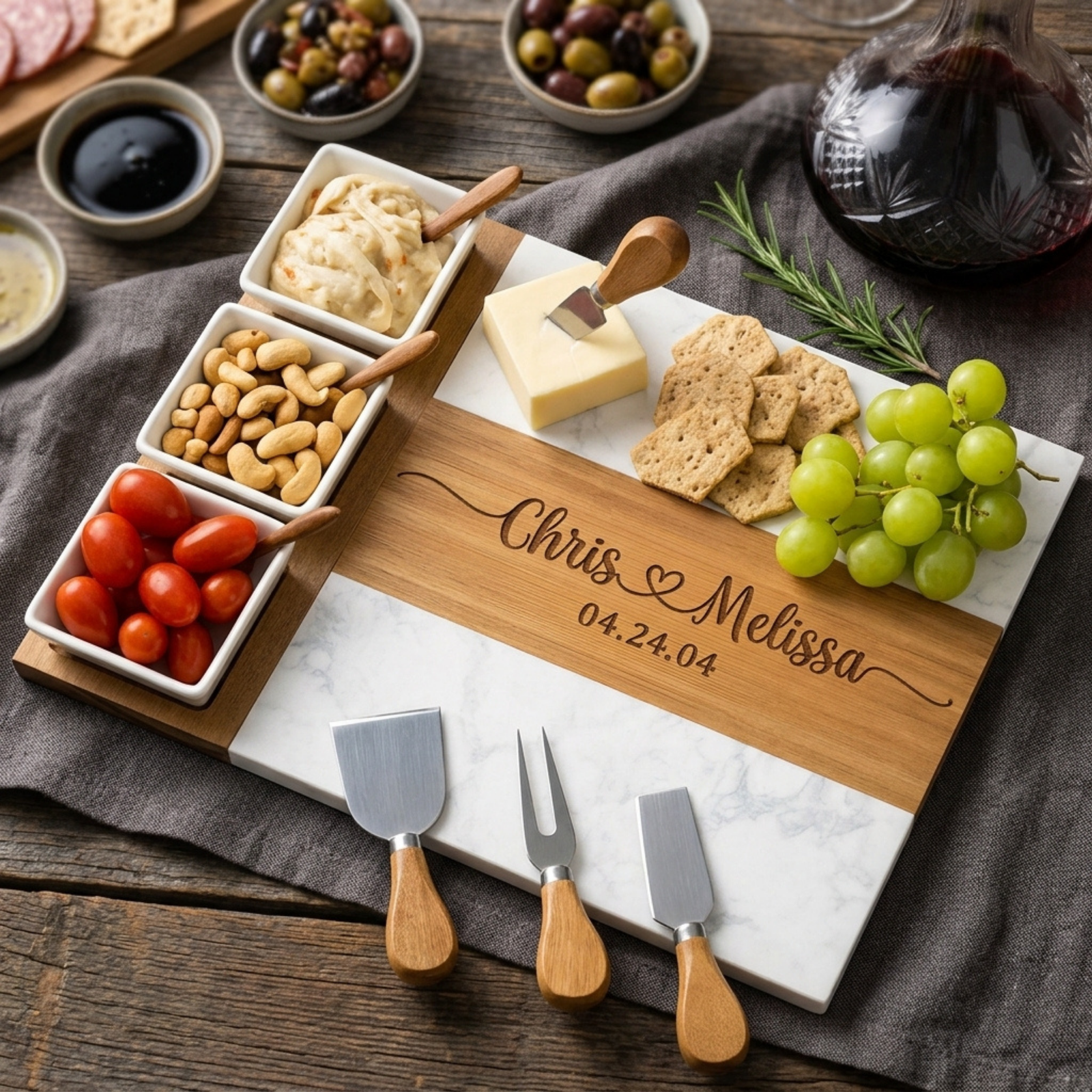
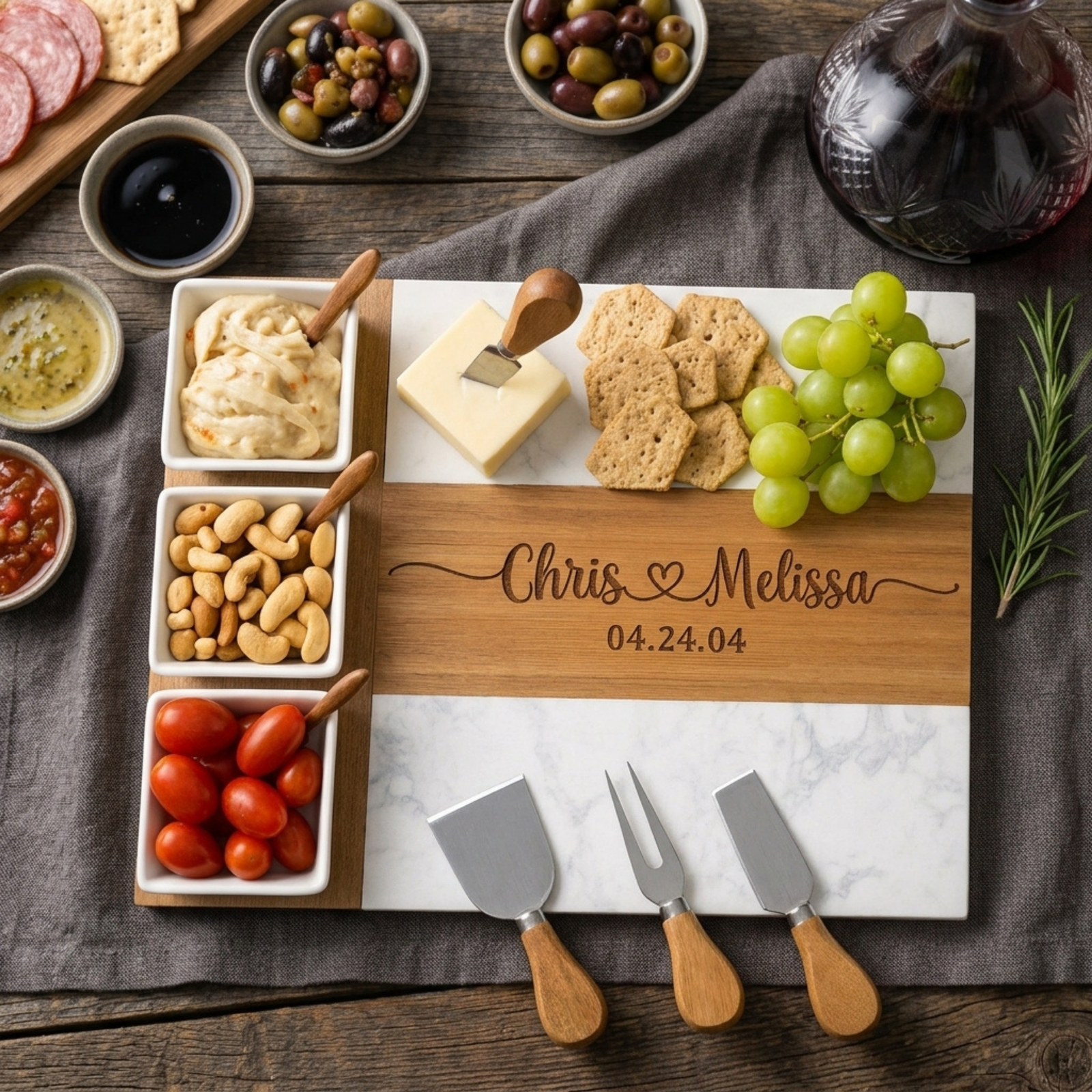
Marble Grove Personalized Charcuterie Board
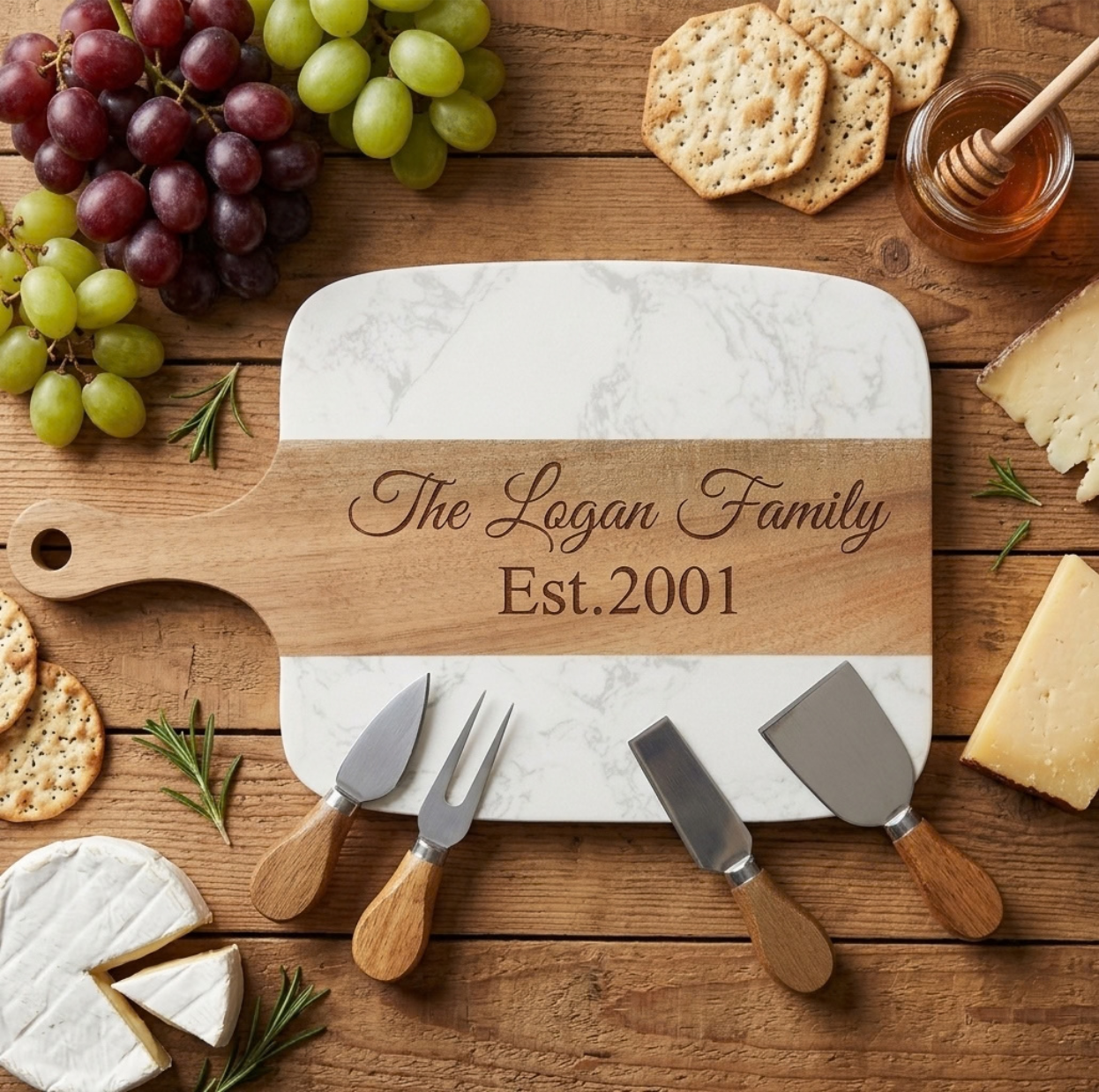
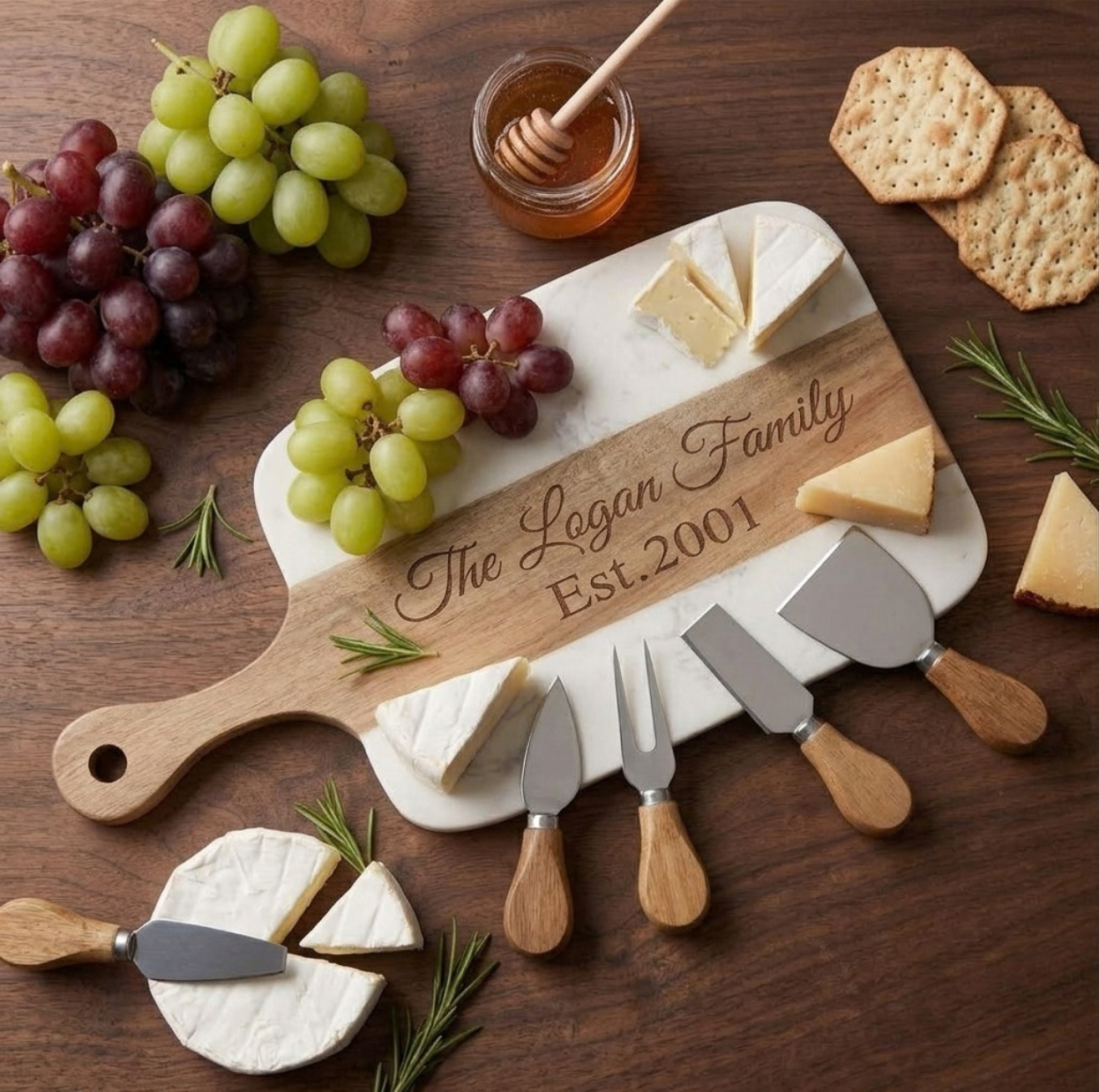
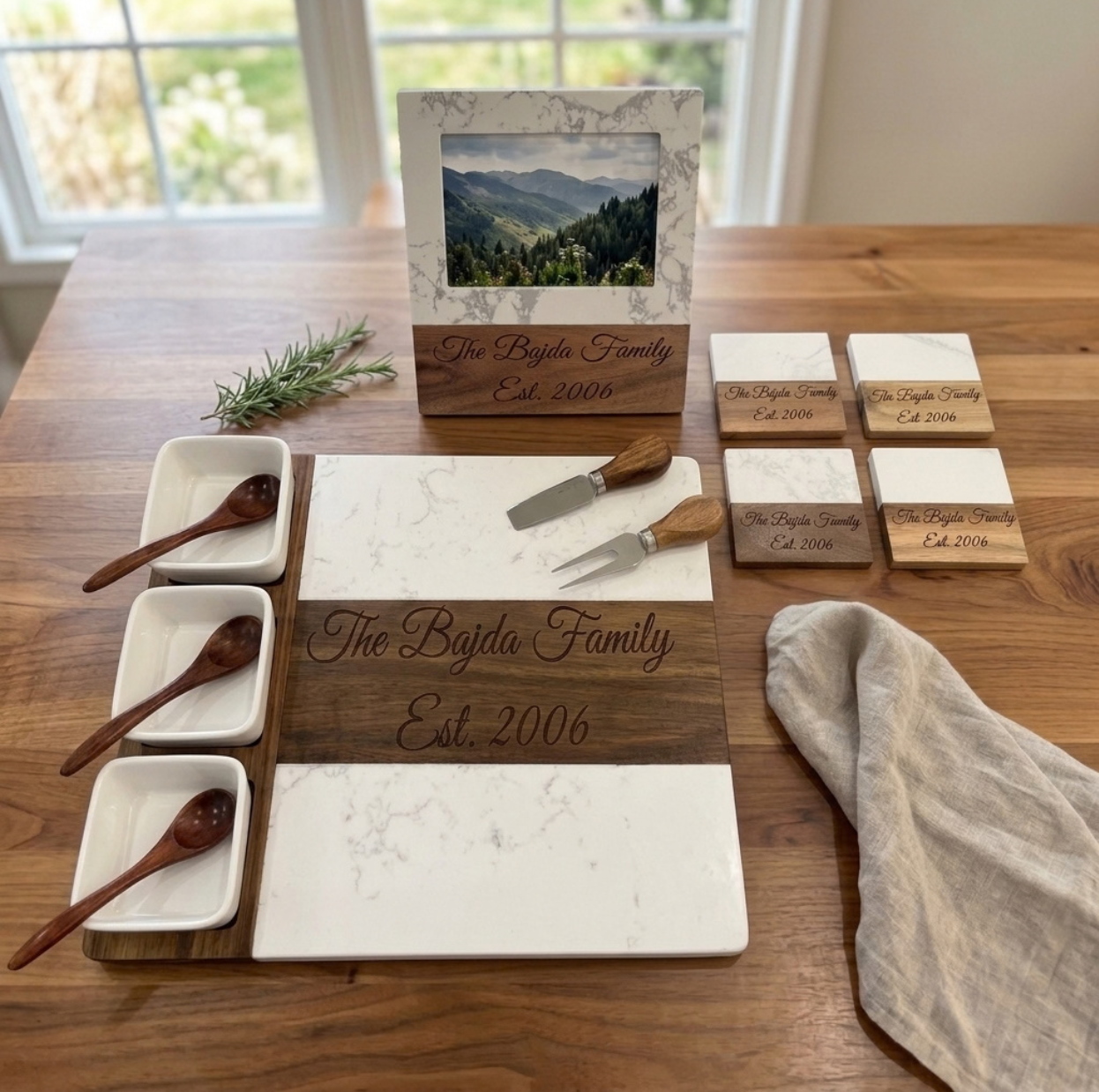
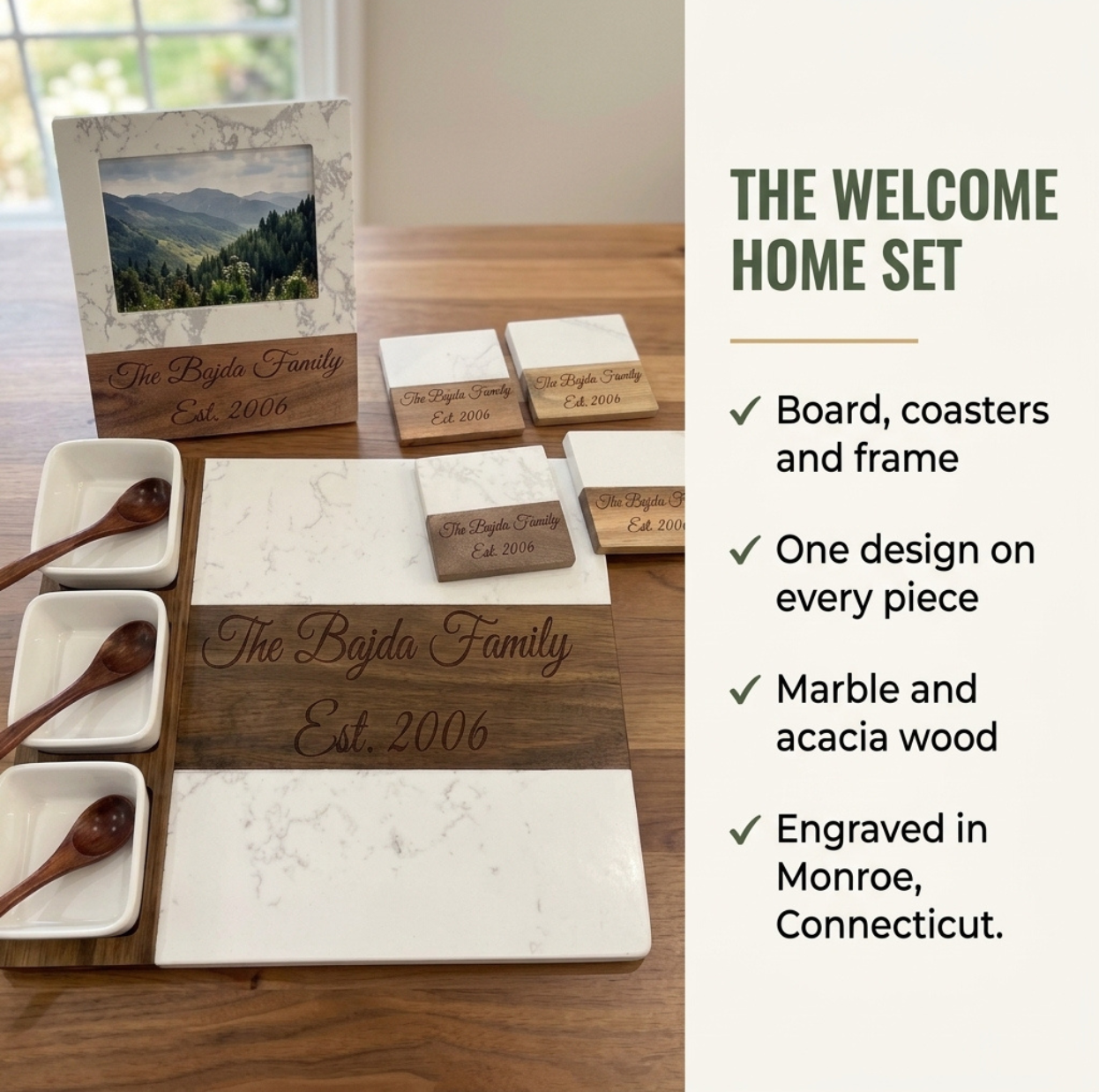
Polished marble paired with a warm acacia wood center, engraved with a family name. Wipe the marble clean with a damp cloth and only oil the wood band.
Shop Now →
Custom Butcher Block
A thick, professional-grade maple or walnut block engraved with a name or message. Its extra thickness holds up to years of oiling without drying out at the edges.
Shop Now →
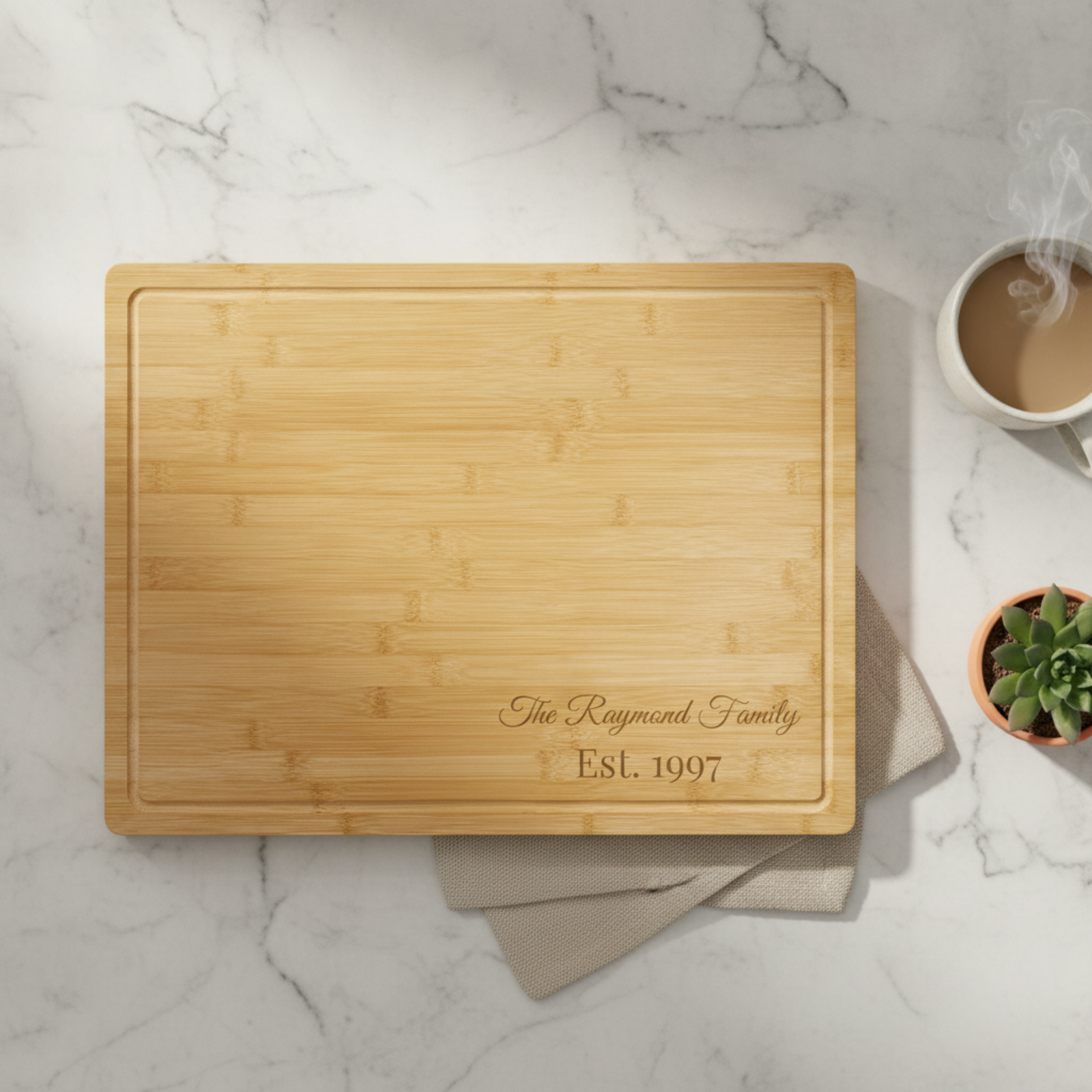
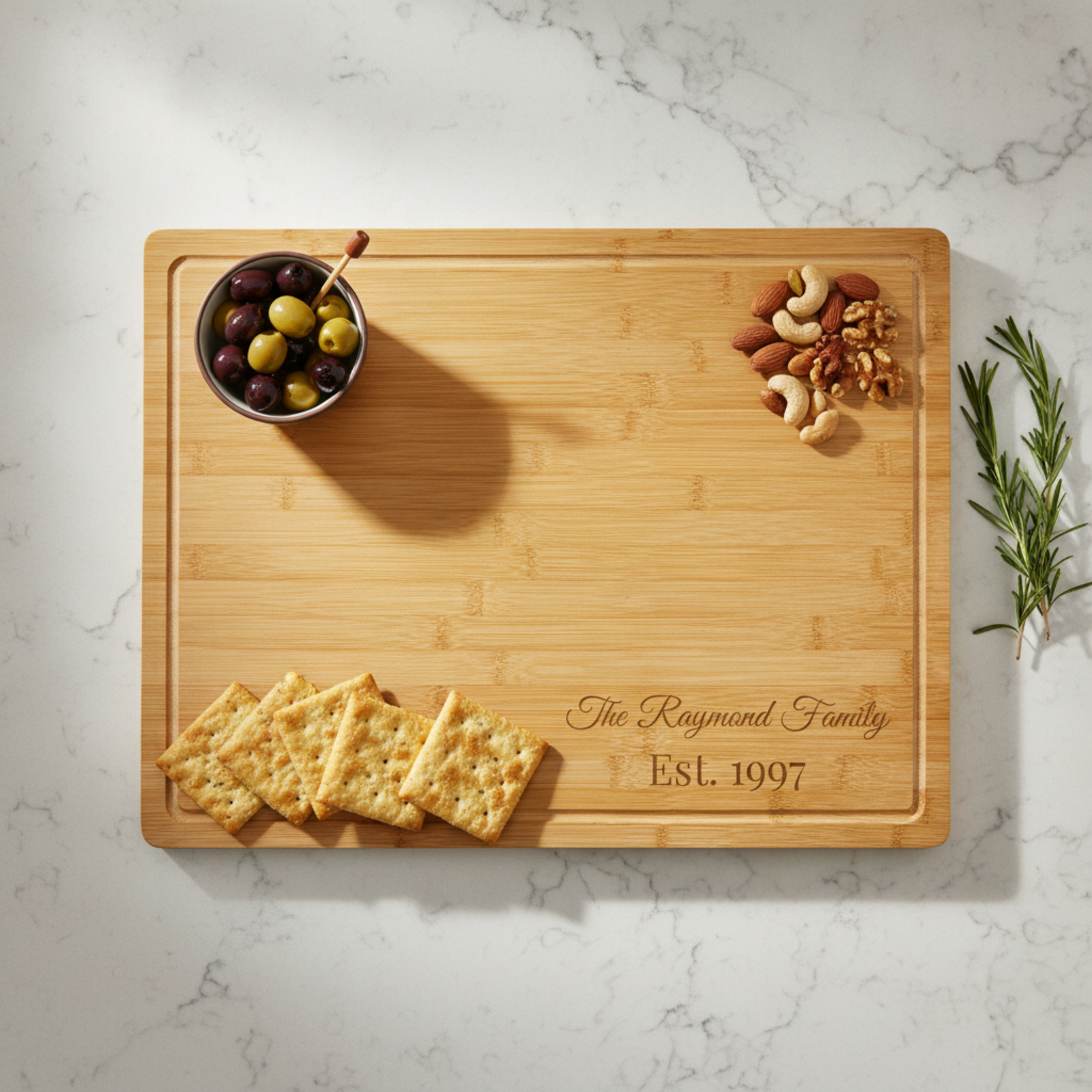
Personalized Large Bamboo Cutting Board
A substantial 19¾" x 15" bamboo board with a deep drip ring, engraved with a family name. The product page itself calls for periodic mineral oil conditioning, exactly the routine covered above.
Shop Now →
Fish Handled Personalized Cutting Board
Solid maple and mahogany with cast metal fish handles for a coastal look. Hardwood like this takes oil beautifully; a monthly coat keeps the two-tone grain from drying out at the edges.
Shop Now →Ready for a Board Worth Taking Care Of?
A cutting board is only as good as the story it tells. Add a name, date, or logo to a board built from real wood, and every wash and oiling becomes part of caring for something that is actually yours.
Shop Personalized Cutting Boards →

Willow & Hive Team
Colin Raymond is part of the team at Willow & Hive, the shop for personalized gifts for the home. He holds an undergraduate degree from the University of Connecticut and brings a lifelong competitive streak from golf and hockey to his work. Every board in this guide ships from the Willow & Hive fulfillment center in Monroe, Connecticut, where each order is personalized and shipped by hand.
Frequently asked questions
Can you put a wooden cutting board in the dishwasher?
No. The heat, water pressure, and prolonged soaking in a dishwasher will warp, crack, and split a wood or bamboo board. Always hand wash with hot water and a mild dish soap, then dry it immediately.
What oil should you never use on a cutting board?
Avoid cooking oils like olive, vegetable, or canola oil. They never fully harden and will turn rancid over time, leaving your board smelling sour. Stick to food-grade mineral oil or a board-specific conditioning oil instead.
Can you use coconut oil on a cutting board?
Regular coconut oil is still a food oil that can go rancid, so it is not a great choice. Only a fractionated coconut oil labeled for wood care is safe long term. Food-grade mineral oil remains the simplest, most reliable option.
How long should a cutting board dry after oiling?
Let a freshly oiled board sit for several hours, ideally overnight, so the wood has time to fully absorb the oil. Wipe away any excess with a clean cloth before using the board again.
Do bamboo cutting boards need oiling the same way as wood boards?
Yes. Bamboo is technically a grass, not a hardwood, but it is still porous and benefits from the same food-grade mineral oil treatment on the same schedule as a maple, walnut, or acacia wood board.
Will cleaning or oiling damage a laser engraved design?
No, as long as you hand wash and dry the board normally. Laser engraving burns the design into the wood grain itself, so it will not lift, fade, or wash away with regular care.
Keep Reading


More from Willow & Hive
© 2026 Willow & Hive · 484 Pepper St, Unit A, Monroe, CT 06468 · willowhive.com
Also in Charcuterie Board Ideas
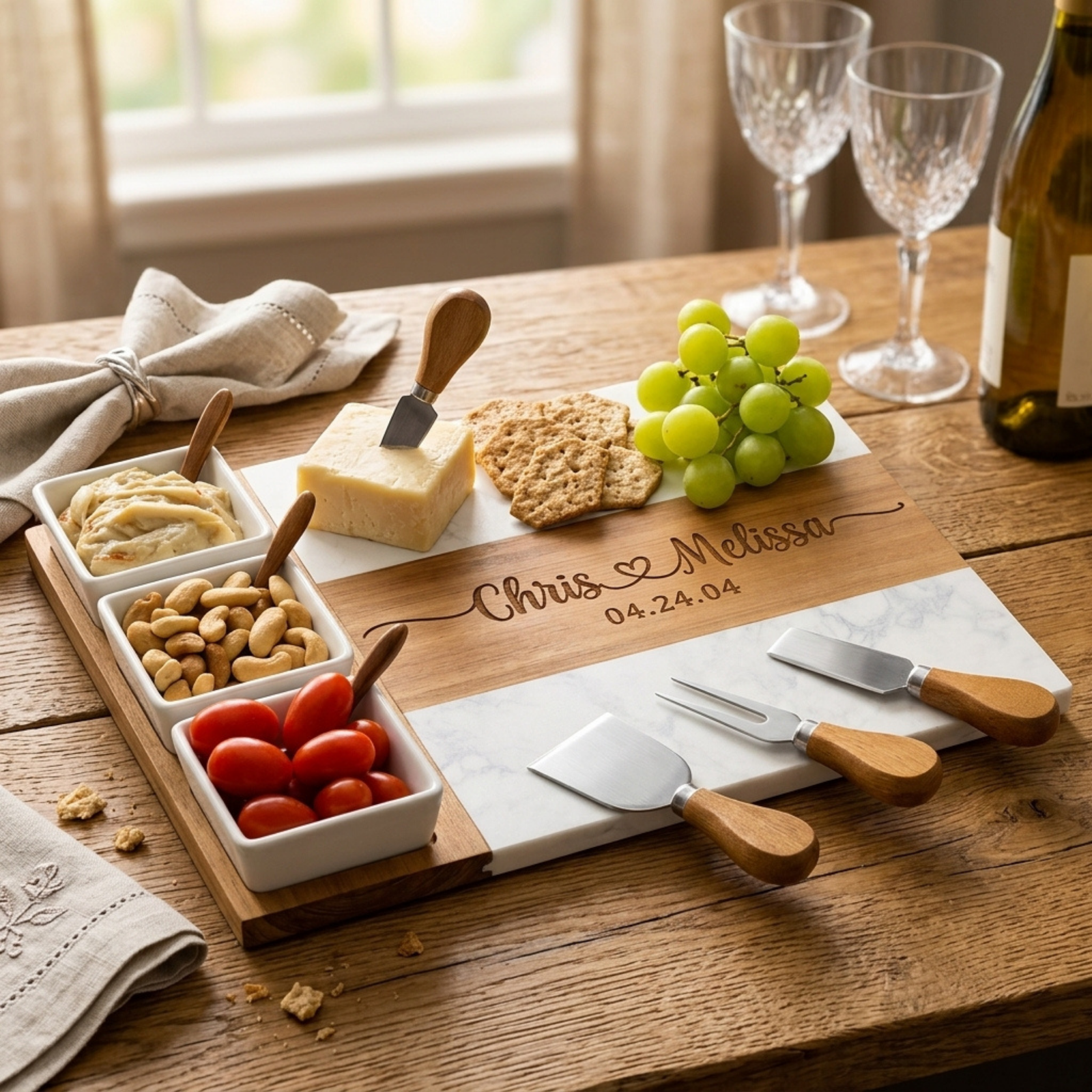

23 Breakfast and Brunch Charcuterie Board Ideas for Every Kind of Morning
Twenty one breakfast and brunch charcuterie board ideas, from family-style spreads and mimosa bars to make-ahead tips and a full price guide. Real personalized boards from Willow & Hive included in every occasion.



20 Thanksgiving Charcuterie Board Ideas for Your Best Holiday Spread
20 fresh Thanksgiving charcuterie board ideas, from a turkey-shaped showstopper to a 15-minute harvest classic. Includes a price guide, a printable shopping list, and the personalized boards that turn the spread into a keepsake gift.