
Personalized Christmas gifts for every home on your listPersonalized Christmas gifts

Skip to content

Free Personalization on Every Order

0

Your Cart is Empty

Best Wood for Cutting Boards: Maple, Walnut, Acacia and Bamboo Compared

by Colin Raymond November 09, 2026

The best wood for cutting boards is hard maple: dense, tight grained and gentle on knives. Black walnut, cherry, teak and acacia are close behind, and each has its own strengths. Below you will find every common board material compared by hardness, knife wear, care and look, so you can pick the right wood the first time.

Maple butcher block engraved Sean & Tara in script with 10/12/2026 below, with a chef's knife, two oranges and a lime half on a gray wood table

We engrave cutting boards, butcher blocks and serving boards every day in our Monroe, Connecticut shop, in maple, walnut, acacia and bamboo. That means we see how each wood takes an engraving, how it looks after years on a counter and what customers wish they had known before they ordered. This guide is the short version of all of it.

Which wood should you pick, in one minute?

Pick hard maple if you want one board that does everything. Pick walnut if you want the gentlest board for your knives and a darker, richer look. Pick acacia for a serving or charcuterie board with bold grain. Pick bamboo for a budget friendly serving board, but not for daily chopping with good knives.

  • Best all around: hard maple
  • Easiest on knives: black walnut or cherry
  • Best for serving: acacia
  • Best on a budget: bamboo, for serving more than chopping

What is the best wood for a cutting board?

The best wood for a cutting board is a dense, tight grained hardwood that is hard enough to resist deep cuts but soft enough to protect your knife edge. Hard maple is the classic choice, rated 1,450 on the Janka hardness scale. Black walnut, black cherry, teak and acacia also make excellent boards, while softwoods and open grained woods do not.

Three things decide whether a wood makes a good board. Hardness: roughly 900 to 1,500 on the Janka scale is the sweet spot, firm enough to last and forgiving on a sharp edge. Grain: small, tight pores keep food and moisture out. Safety: stick to woods with a long history in food use, like the ones in the chart below.

How do cutting board woods compare?

Hard maple is the hardest common cutting board wood at 1,450 on the Janka scale, followed by teak at 1,070, black walnut at 1,010 and black cherry at 950, according to The Wood Database. Acacia varies by species. Bamboo is not a wood at all but a grass, pressed and glued into boards that are harder on knives than most of them.

Wood Janka hardness (lbf) Grain On your knives Look Best for
Hard maple 1,450 Small, even pores Gentle Light honey; shows engravings best Everyday chopping, butcher blocks
Teak 1,070 Contains up to 1.4% silica Dulls edges faster Golden brown Durable everyday boards
Black walnut 1,010 Medium pores Very gentle Deep chocolate brown Knife lovers, statement boards
Black cherry 950 Fine, smooth Very gentle Pinkish brown, darkens with age Smaller boards, gifts
Acacia Varies by species (Australian blackwood: 1,160) Bold, varied grain Gentle to moderate Warm, high contrast grain Serving and charcuterie boards
Bamboo Not a wood; varies by how it is made Strips glued under pressure Hard on knives Pale and uniform Budget serving boards
Red oak (avoid) 1,220 Large open pores Gentle Coarse grain Furniture, not food

Source: The Wood Database, Hard Maple; Black Walnut; Black Cherry; Teak; Red Oak; Australian Blackwood.

Is maple the best wood for a cutting board?

Yes, hard maple is widely considered the best all around wood for a cutting board. It is very hard at 1,450 on the Janka scale, so it resists deep knife scars, yet it still has enough give to protect a sharp edge. Its small, even pores keep moisture out, and its pale color makes it easy to spot when the board needs cleaning.

Hard maple, also called sugar or rock maple, is the wood behind most classic butcher blocks. The Wood Database lists cutting boards and butcher blocks among its common uses. The trade off is looks: maple is light and plain next to walnut, and it shows stains from beets and berries more than darker woods do.

Maple butcher block engraved Sean & Tara in script with 10/12/2026 below, with a chef's knife, two oranges and a lime half on a gray wood table
Choose maple or walnut

Custom Butcher Block, Maple or Walnut

A full 1.5 inches of solid maple or walnut in a checkerboard of real wood, 16 x 13 inches. The engraving sits near one corner, so the center stays free for carving the turkey or chopping a pile of vegetables.

Shop Now
Close-up of a maple cutting board engraved with a large serif M monogram above a line and the name Matthews, with a chef's knife on top
Made in the USA

Custom Monogram Wood Cutting Board

Solid maple or walnut made in the USA from American lumber, 3/4 inch thick, in four sizes. A large monogram and the family name sit in one corner, leaving the rest of the board open for everyday chopping.

Shop Now
Natural maple paddle board with a round handle, laser engraved with initials C and A inside a delicate leaf wreath with est. 11.19.2007
Maple paddle with a handle

Couples Timeline Maple Paddle Board

A 13.5 x 7 inch natural maple paddle with a built in handle, engraved with two initials inside a leaf wreath and the date your story started. Pale maple lets every line of the engraving show.

Shop Now
Natural maple paddle board with a round handle, laser engraved with initials C and A inside a geometric leaf frame with est. 11.19.2007
Maple paddle, modern frame

Together Forever Maple Paddle Board

The same 13.5 x 7 inch maple paddle with two initials inside a modern geometric frame and trailing sprigs. It hangs on the kitchen wall like art and comes down whenever the cheese comes out.

Shop Now

Want the butcher block in a specific wood? Open it already set to maple or walnut.

Maple vs walnut: which cutting board is better?

Maple is better if you want maximum durability and a light, classic look, and walnut is better if you want the gentlest board for your knives and a rich, dark color. Maple rates 1,450 on the Janka scale and walnut 1,010, so walnut is noticeably softer on a blade. Walnut also hides stains better, while maple shows engraving more crisply.

Hard maple Black walnut
Janka hardness 1,450 1,010
On your knives Gentle Gentler
Look Light, creamy honey Deep chocolate brown
Stains Shows beet and berry stains Hides most stains
Engraving Darkest, crispest contrast Subtle, tone on tone
Price Usually less Usually more
Black walnut cutting board with a natural edge, engraved with initials C and A inside a delicate leaf wreath with est. 11.19.2007, beside glasses of wine
Natural edge walnut

Couples Timeline Walnut Cutting Board

Solid black walnut, 13.75 x 9.75 inches, with a natural edge, so the shape and grain are one of a kind. Two initials in a leaf wreath and your date, engraved for a warm, timeless look.

Shop Now
Black walnut cutting board with a natural edge, engraved with initials C and A inside a geometric leaf frame with est. 11.19.2007, beside glasses of wine
Natural edge walnut

Together Forever Walnut Cutting Board

Natural edge black walnut, 13.75 x 9.75 inches, with initials inside a geometric frame and the date you started counting. Leave it out on the counter and it reads like part of the decor.

Shop Now

Is acacia good for cutting boards?

Yes, acacia is good for cutting boards and especially for serving and charcuterie boards. It is a dense, durable hardwood with bold, high contrast grain, and it is usually more affordable than walnut. Acacia is not one wood but a genus of nearly 1,000 species, so hardness varies by board. Australian blackwood, a common acacia, rates 1,160 on the Janka scale.

Because the grain is so striking, acacia is the wood we reach for when a board is meant to be seen: a cheese board on the coffee table, a tray on the patio or a round board in the middle of the dinner table. It also pairs beautifully with marble and resin, which is why most of our serving boards use it.

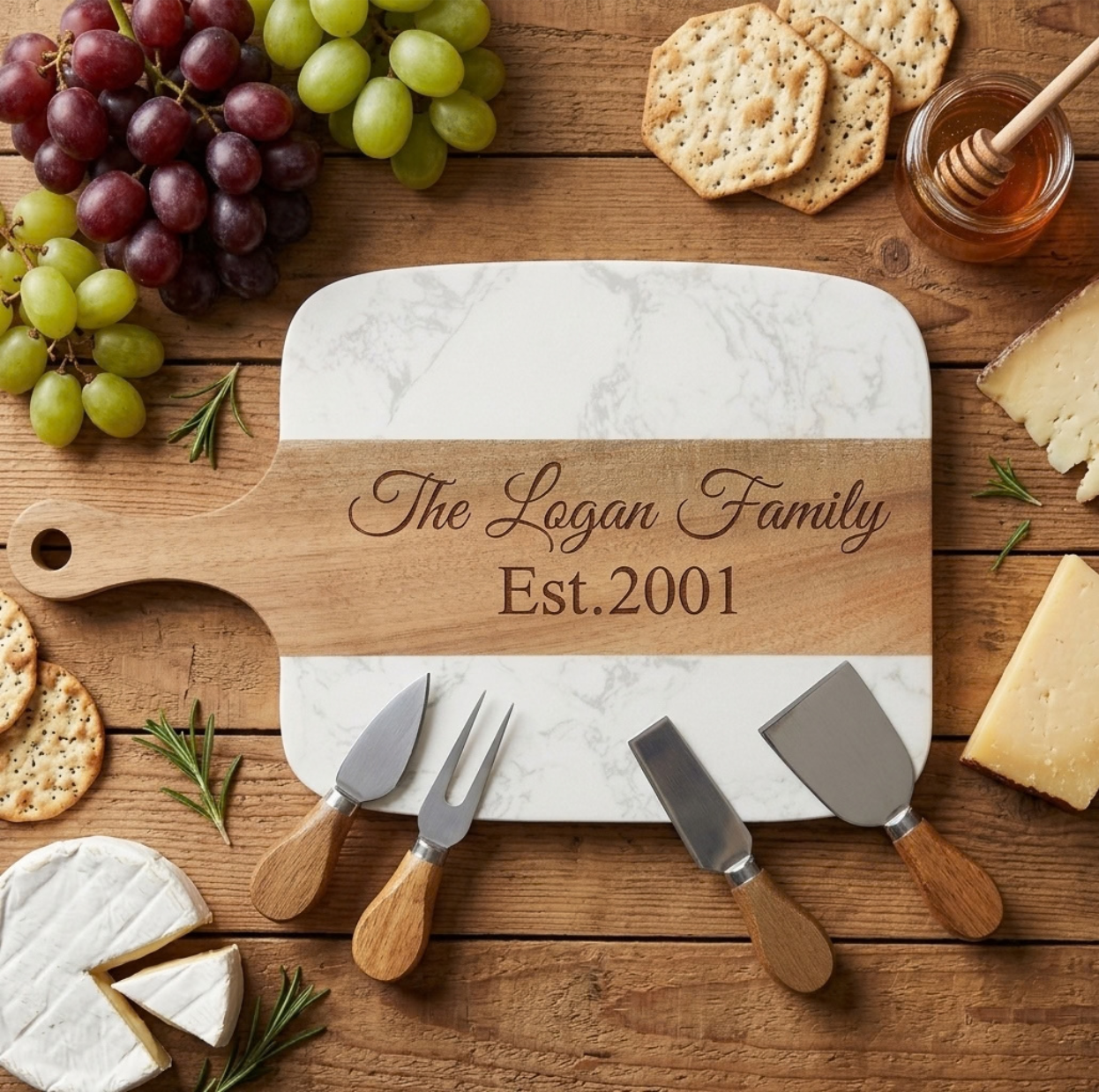
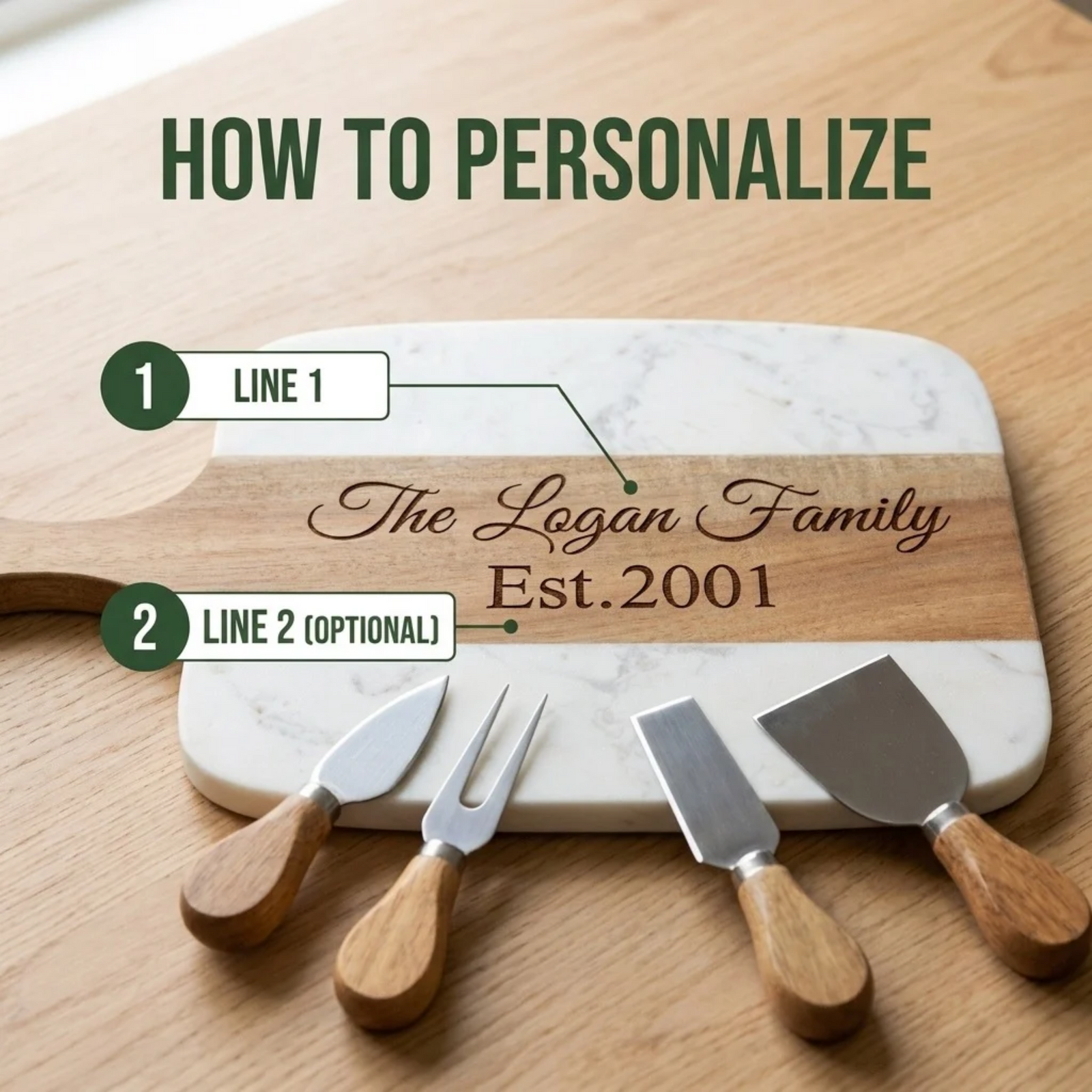
Marble and acacia paddle charcuterie board engraved The Logan Family and Est.2001, with four cheese tools, grapes, crackers and brie on a wood table
Acacia and white marble

Script Paddle Charcuterie Board

White marble with a strip of warm acacia across the middle, 15.5 x 9 inches, with four cheese tools. The names are engraved into the acacia, never the marble, for a crisp, lasting finish.

Shop Now
Round acacia charcuterie board with a pearl white resin river, engraved Tara and Sean in script with Home Sweet Home and Est. 2019, on black marble
Acacia with a resin river

Riverbend Round Resin Charcuterie Board

A 16 inch round acacia board with a hand poured river of Pearl White or Ocean Blue resin and a raised edge. Names go above the river in script, with up to two more lines below.

Shop Now
Acacia and blue resin serving tray engraved The Harpers and EST. 2019 with grapes, brie, crackers, almonds, olives and salami on a dining table
Acacia serving tray

Blue River Serving Tray

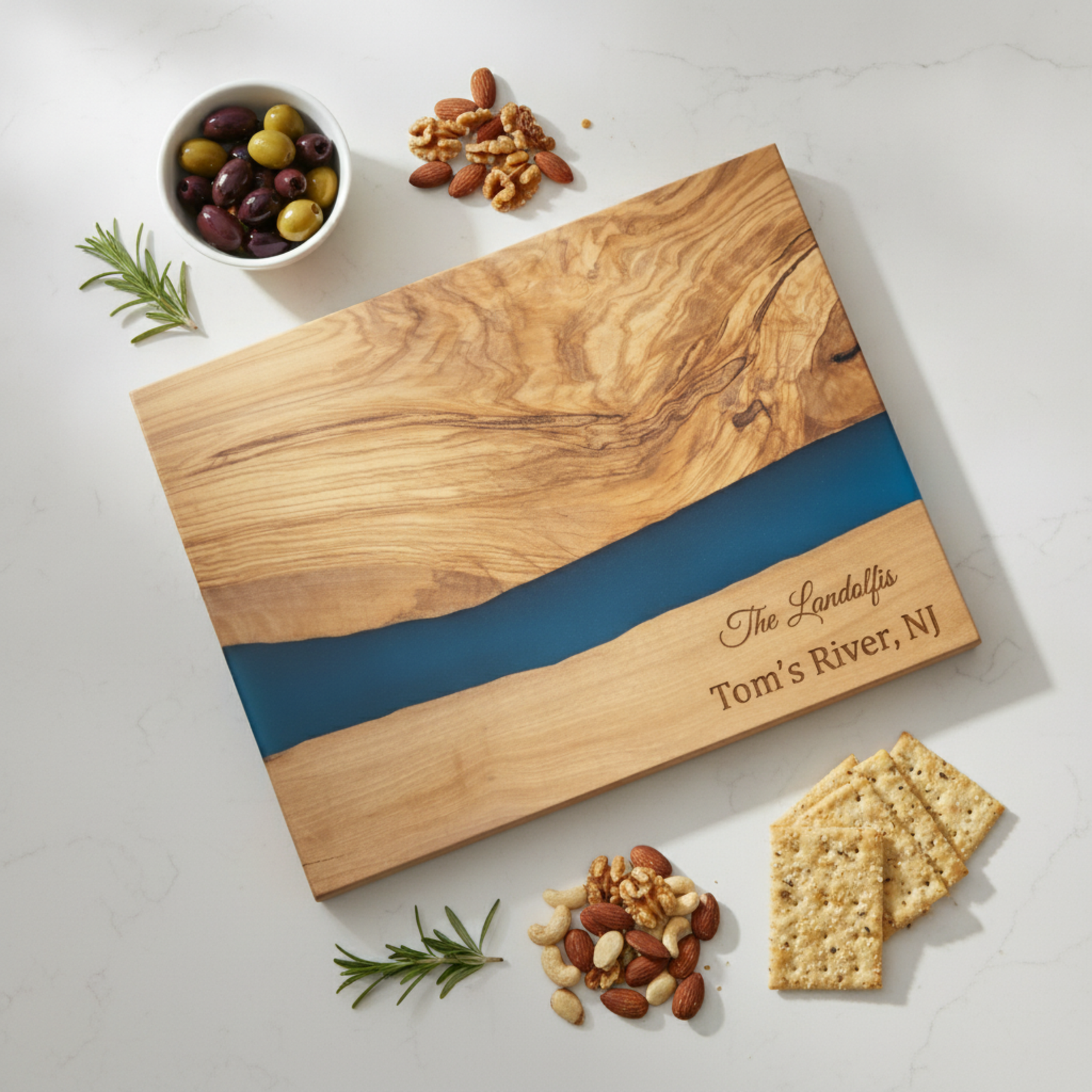
An 18 x 9 inch acacia tray with a river of blue pearl resin and gold handles. The blue follows the grain of each board, so no two rivers wander the same way.

Shop Now

Source: The Wood Database, Acacia (wattle) genus; Australian Blackwood.

Are bamboo cutting boards good?

Bamboo cutting boards are good for serving, display and light prep, but they are harder on knives than maple, walnut or cherry. Bamboo is a grass, not a wood, and boards are made from strips pressed together with glue, which creates a hard surface that dulls a sharp edge faster. In return, bamboo is affordable and lightweight.

Here is our honest take, even though we sell bamboo boards: if you chop every day with a good chef's knife, choose maple or walnut for your main board. Bamboo shines as a big serving board, a charcuterie board for a crowd or an engraved gift that will mostly carry bread, cheese and steak to the table. A long bamboo board with a drip ring is hard to beat for that.

Bamboo housewarming cutting board engraved with a house and heart, Home Sweet Home and The Johnson Family, styled with grapes, figs, cheese and crackers
23 3/4 inches long

Personalized Housewarming Cutting Board

A long 23 3/4 x 12 inch solid bamboo board with a carved drip ring and recessed handles, in six engraved designs from a full address to a simple family name. Built for serving a crowd.

Shop Now
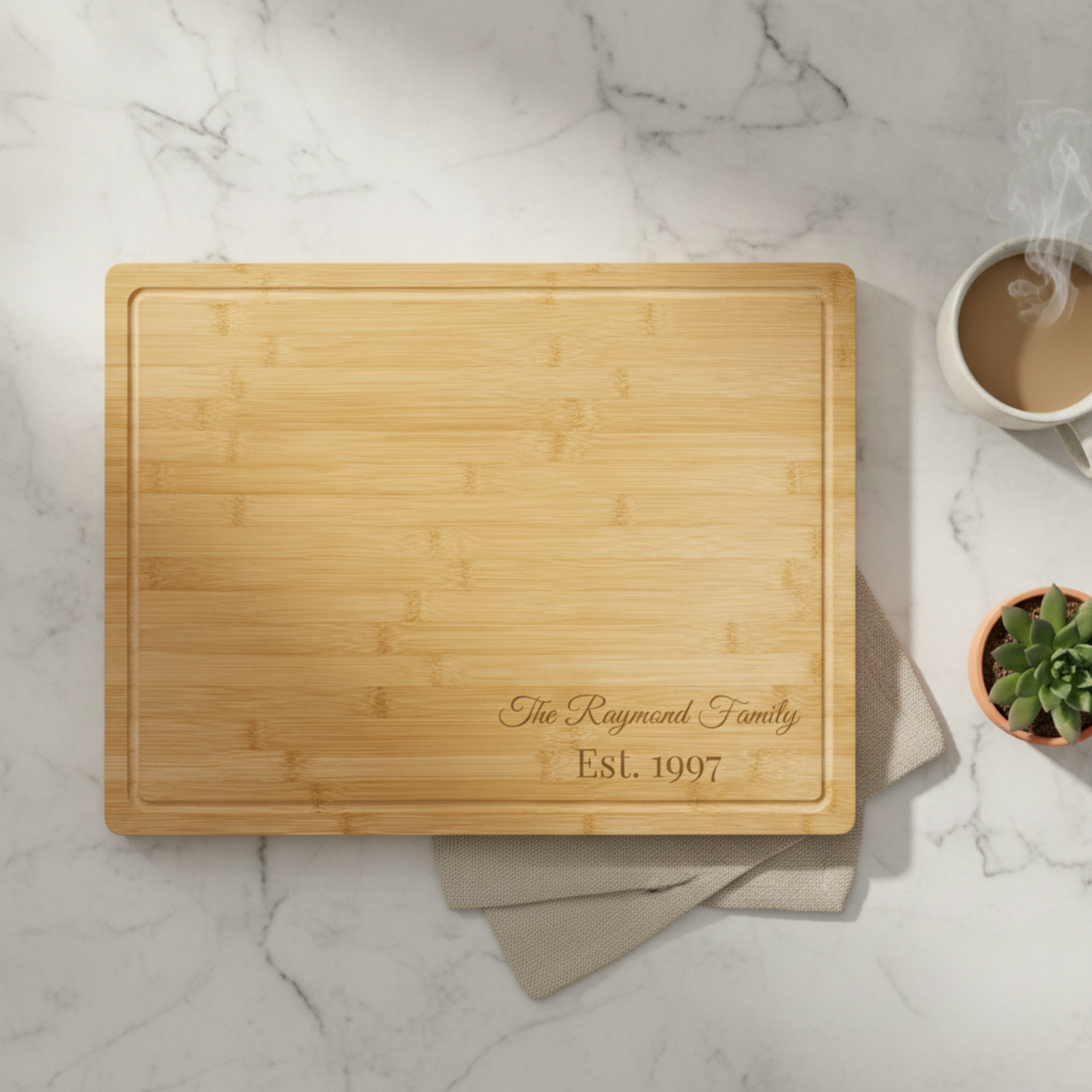
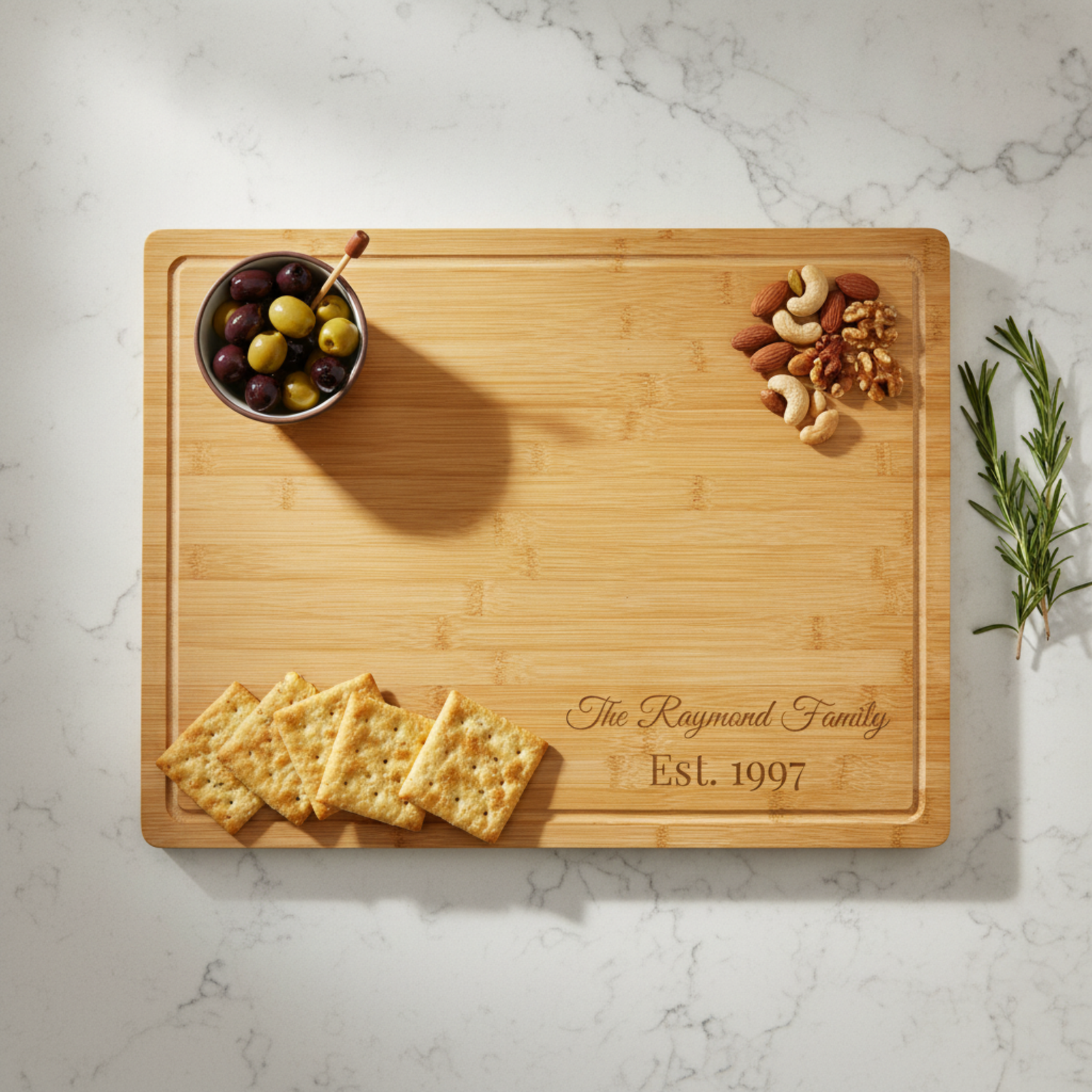
Bamboo board engraved The Raymond Family and Est. 1997, styled with olives, nuts, crackers and fresh rosemary on a marble counter
Deep drip ring

Personalized Large Bamboo Cutting Board

A solid 19 3/4 x 15 inch bamboo board, a half inch thick, with a deep drip ring around the edge. Two lines engraved centered or in the bottom right corner.

Shop Now
Bamboo steakhouse cutting board engraved with a longhorn steer, JOHNSON'S STEAKHOUSE and EST. 1998 on a stone grill counter with sliced steak
For carving and serving steak

Steakhouse Cutting Board

Solid bamboo, 23 3/4 x 12 inches, engraved with a longhorn steer, his name and STEAKHOUSE, TAVERN or a word of your own. The drip ring catches the juices from a resting steak.

Shop Now

End grain vs edge grain: what is the difference?

End grain boards are made from short blocks set with the wood fibers pointing up, so a knife slips between the fibers instead of cutting across them. They are kinder to knives and hide cut marks, but cost more and need more oil. Edge grain boards are made from long strips laid on their sides. They are lighter, more affordable and very durable.

End grain Edge grain
How it is made Short blocks, fibers pointing up, often a checkerboard look Long strips glued side by side
On your knives Gentlest Gentle
Cut marks Close up and hide well Show over time
Upkeep Needs oil more often Easier
Weight and price Heavier, usually more expensive Lighter, more affordable

Either is a great board in maple or walnut. If you mostly slice bread, cheese and vegetables, edge grain is all you need. If you do heavy daily chopping with expensive knives, end grain is worth the upgrade.

Wood vs plastic: which cutting board is more sanitary?

Both wood and plastic cutting boards are safe when you wash them with hot soapy water and replace them once they are deeply grooved. Plastic can go in the dishwasher, which is why many kitchens keep a plastic board for raw meat. Wood is kinder to knives and, kept clean and dry, is a safe choice for bread, cheese and produce.

The research is more balanced than either side claims. In a 1994 study, food safety researchers Ak, Cliver and Kaspar contaminated wood and plastic boards with bacteria and compared how they behaved and how they cleaned up. On the other side, the University of Maine Cooperative Extension leans toward nonporous boards, since there's less risk for bacteria to soak into the cutting board.

The setup most cooks land on: a wood board for bread, cheese, fruit and vegetables, and a separate plastic board for raw meat, poultry and fish. Wash both with hot soapy water after every use, and dry the wood board right away.

Source: Ak, Cliver and Kaspar, Cutting Boards of Plastic and Wood Contaminated Experimentally with Bacteria, Journal of Food Protection, 1994; University of Maine Cooperative Extension, Cutting Board Safety.

What woods should you avoid for a cutting board?

Avoid softwoods like pine, cedar and fir, which scar and splinter easily, and open grained hardwoods like red oak, whose large pores can trap food and moisture. The Wood Database notes red oak pores are so open you can blow air through a board end to end. Also skip any exotic wood without a long history of food use.

  • Softwoods (pine, cedar, fir): too soft, scar quickly and can taste resinous.
  • Open grained hardwoods like red oak: large pores hold moisture and food.
  • Very hard exotics: woods far above the maple range are hard on knives.
  • Unknown or treated wood: never use reclaimed, stained or pressure treated lumber for food.

What is the best wood for a charcuterie board?

The best wood for a charcuterie board is acacia, walnut or maple: food safe hardwoods with grain that looks beautiful under cheese and fruit. Acacia is the most popular for its bold, warm grain and price, walnut gives a dark, dramatic backdrop and maple keeps things light and classic. Marble and resin accents look stunning, but slice on the wood, never on stone.

A charcuterie board is a serving piece first, so looks matter more than knife wear. Cut the cheese on a separate cutting board or on the wood strip only, since marble and glass dull knives quickly. For more on building the spread itself, see how to make a charcuterie board and our picks for the best charcuterie boards for 2026.

Marble and acacia paddle charcuterie board engraved The Logan Family and Est.2001, with four cheese tools, grapes, crackers and brie on a wood table
Board tip

The Script Paddle Charcuterie Board ($59.99) puts the acacia exactly where the names go, across the center of white marble, and comes with four cheese tools so nobody cuts on the stone.

Which wood is best for an engraved cutting board?

Maple is the best wood for an engraved cutting board. In our Monroe, Connecticut shop, maple gives the darkest, crispest engraving, because the laser burn stands out sharply against the pale wood. Walnut engraves beautifully too, but the result is subtle and tone on tone.

So the choice comes down to the look you want. Choose maple when the names and date should be the first thing anyone notices. Choose walnut for a quieter, more elegant engraving on a darker board. Either way, keep the engraving near a corner on a board you plan to chop on, so the open surface stays free for work.

Maple butcher block engraved Sean & Tara in script with 10/12/2026 below, with a chef's knife, two oranges and a lime half on a gray wood table
Engraving tip

The Custom Butcher Block, Maple or Walnut ($129.99) comes in both woods with the engraving near one corner, so the center stays free for carving. Order it in maple for the boldest engraving, or walnut for a richer board.

Looking for more engraved designs? Browse our guide to personalized cutting boards or the full personalized cutting boards collection.

How do you care for a wood cutting board?

Care for a wood cutting board by hand washing it with hot soapy water after every use, drying it right away and standing it on its edge to air out. Never soak it or put it in the dishwasher, which can warp and crack the wood. Rub in food safe mineral oil whenever the board looks dry, about every 1 to 3 months.

  • Every use: hot soapy water, rinse, towel dry, then stand it on its edge.
  • Odors and stains: scrub with coarse salt and half a lemon, then rinse and dry.
  • Every 1 to 3 months: rub in food safe mineral oil, let it soak in overnight, wipe off the extra.
  • Never: the dishwasher, long soaks or cooking oils like olive or vegetable oil, which can turn rancid.

For the full step by step, including how to deep clean after raw meat, read our guide on how to clean a cutting board.

Which cutting board wood should you choose?

Choose by how you will use the board. For one board that does everything, choose hard maple. For the gentlest board for expensive knives, choose walnut or an end grain block. For a serving or charcuterie board with real wow factor, choose acacia. For a large serving board on a budget, choose bamboo. Engraved as a gift, maple shows names best.

If you want Choose Our pick
One board for everything Hard maple Custom Monogram Wood Cutting Board (From $39.99)
A heavy board for carving and chopping Maple or walnut butcher block Custom Butcher Block, Maple or Walnut ($129.99)
The gentlest board for good knives Black walnut Couples Timeline Walnut Cutting Board ($44.99)
A cheese or charcuterie board Acacia with marble Script Paddle Charcuterie Board ($59.99)
A centerpiece for the table Acacia with resin Riverbend Round Resin Charcuterie Board ($109.99)
A big serving board on a budget Bamboo Personalized Housewarming Cutting Board ($79.99)
A gift that shows the names clearly Maple Together Forever Maple Paddle Board ($44.99)

Every board is engraved after you order, and each product page shows its own ready to ship estimate.

Frequently asked questions about cutting board wood

What cutting board do professional chefs use?

Many professional chefs use a large maple or walnut board for knife work at home, because hardwood is gentle on sharp edges. Commercial kitchens usually add color coded plastic boards for raw meat and fish, since plastic can go through a high heat dishwasher. Plenty of home cooks copy that setup: wood for bread, cheese and vegetables, plastic for raw meat.
What is the most hygienic wood for a cutting board?

The most hygienic woods for a cutting board are tight grained hardwoods like hard maple, with small pores that do not trap food. Black walnut and cherry also work well. Avoid open grained woods like red oak, whose pores are big enough to blow air through. Any wood board stays hygienic with hot soapy water, quick drying and regular oiling.

Is walnut safe for cutting boards?

Yes, black walnut is a safe and popular wood for cutting boards. It is a hardwood rated 1,010 on the Janka scale, soft enough to be kind to knives and hard enough for daily chopping. The Wood Database notes walnut can be a sensitizer, mostly eye and skin irritation, which mainly affects woodworkers handling the sawdust.

How long does a wood cutting board last?

A good wood cutting board can last for many years, even decades, if you hand wash it, dry it right away and oil it whenever it looks dry. Replace any board, wood or plastic, once it develops deep grooves that are hard to clean, which is the same advice the University of Maine Cooperative Extension gives.

Is teak a good wood for cutting boards?

Teak makes a durable cutting board, but it is a little harder on knives than maple or walnut. The Wood Database notes teak contains up to 1.4 percent silica, which has a pronounced blunting effect on cutting edges. If you love the look of teak, hone your knife a little more often.

How often should you oil a wood cutting board?

Oil a wood cutting board whenever the wood looks dry or pale, which is about every 1 to 3 months for most kitchens and more often for a new board. Rub in food safe mineral oil or a board cream with a soft cloth, let it soak in overnight and wipe off the extra. Never use cooking oils, which can turn rancid.

More from Willow & Hive


Also in Charcuterie Board Ideas

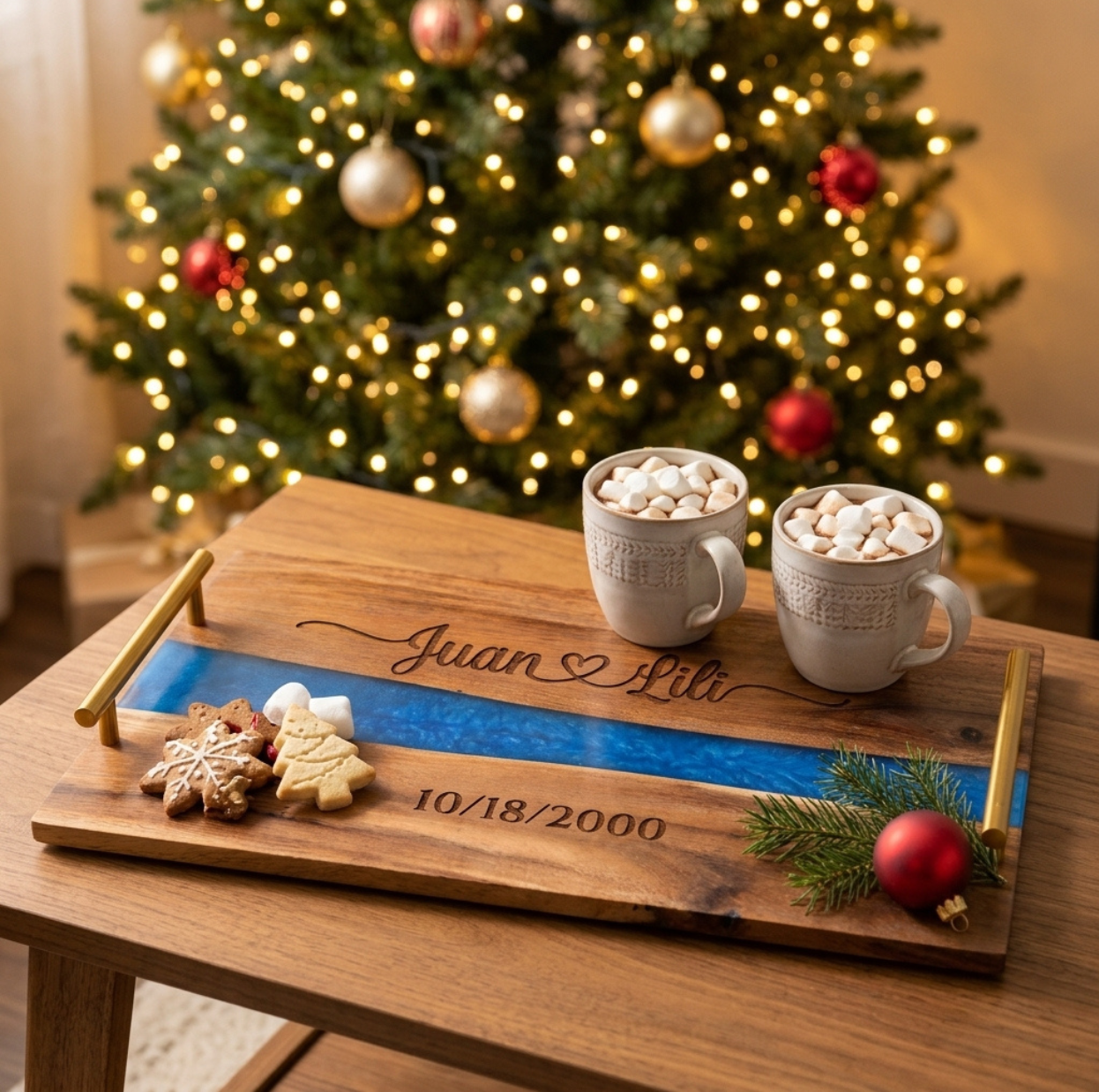
Two mugs of hot cocoa with marshmallows and Christmas cookies on an engraved acacia and blue resin serving tray in front of a lit Christmas tree
How to Make a Hot Chocolate Charcuterie Board (Plus 15 Hot Cocoa Bar Ideas)

by Colin Raymond November 06, 2026

Set out a board of marshmallows, candy canes, cookies, and sauces next to a pot of warm cocoa, and everyone builds the mug they want. Here is how to make a hot chocolate charcuterie board in 7 steps, plus 15 hot cocoa bar ideas for the holidays. 

Read More
The Best Meats for a Charcuterie Board: 12 Picks, Pairings, and How Much to Buy

by Colin Raymond November 04, 2026

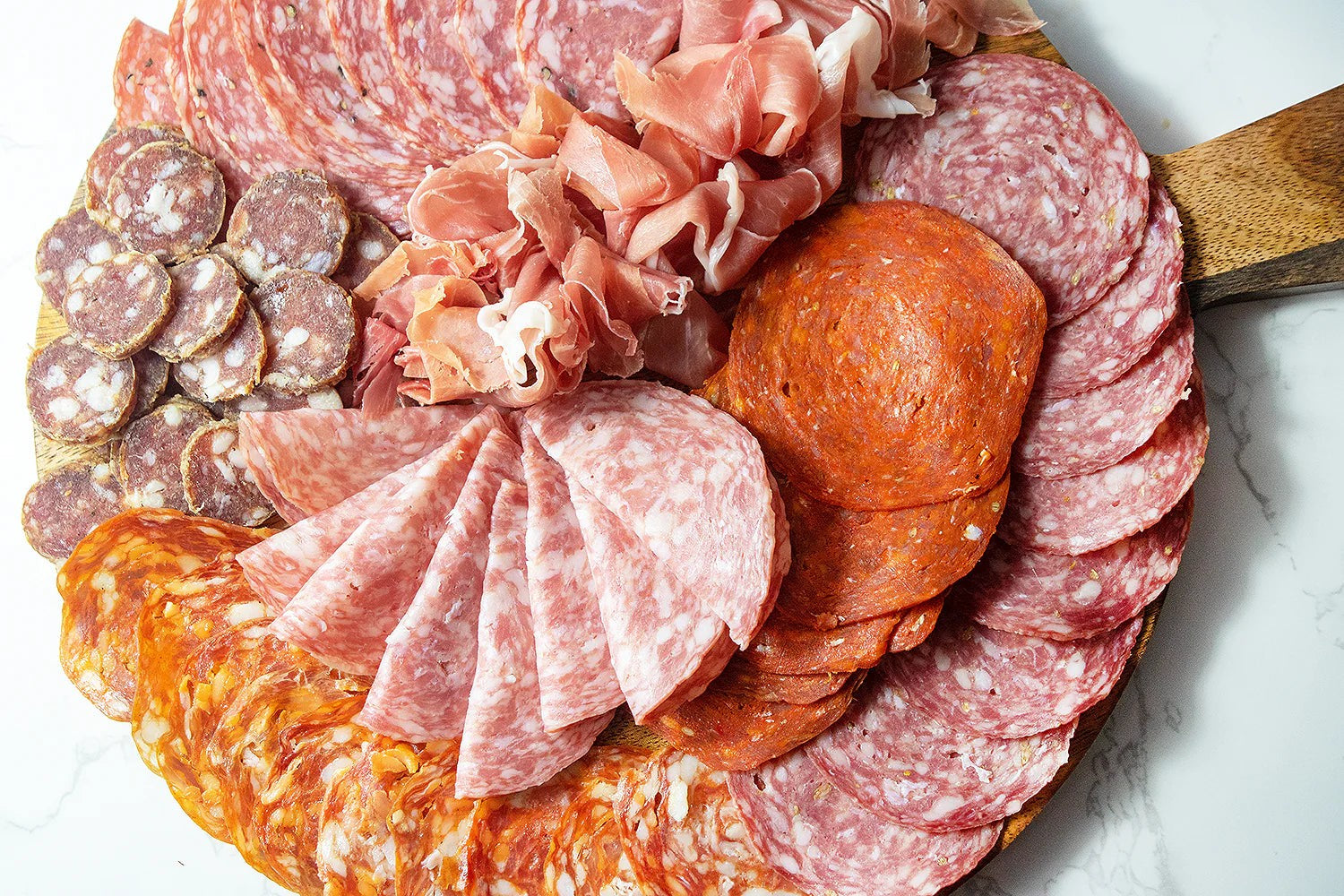
The best meats for a charcuterie board, from silky prosciutto to spicy soppressata. See 12 charcuterie meats, the cheese each one pairs with, how much to buy per guest and how to slice and fold them. 

Read More
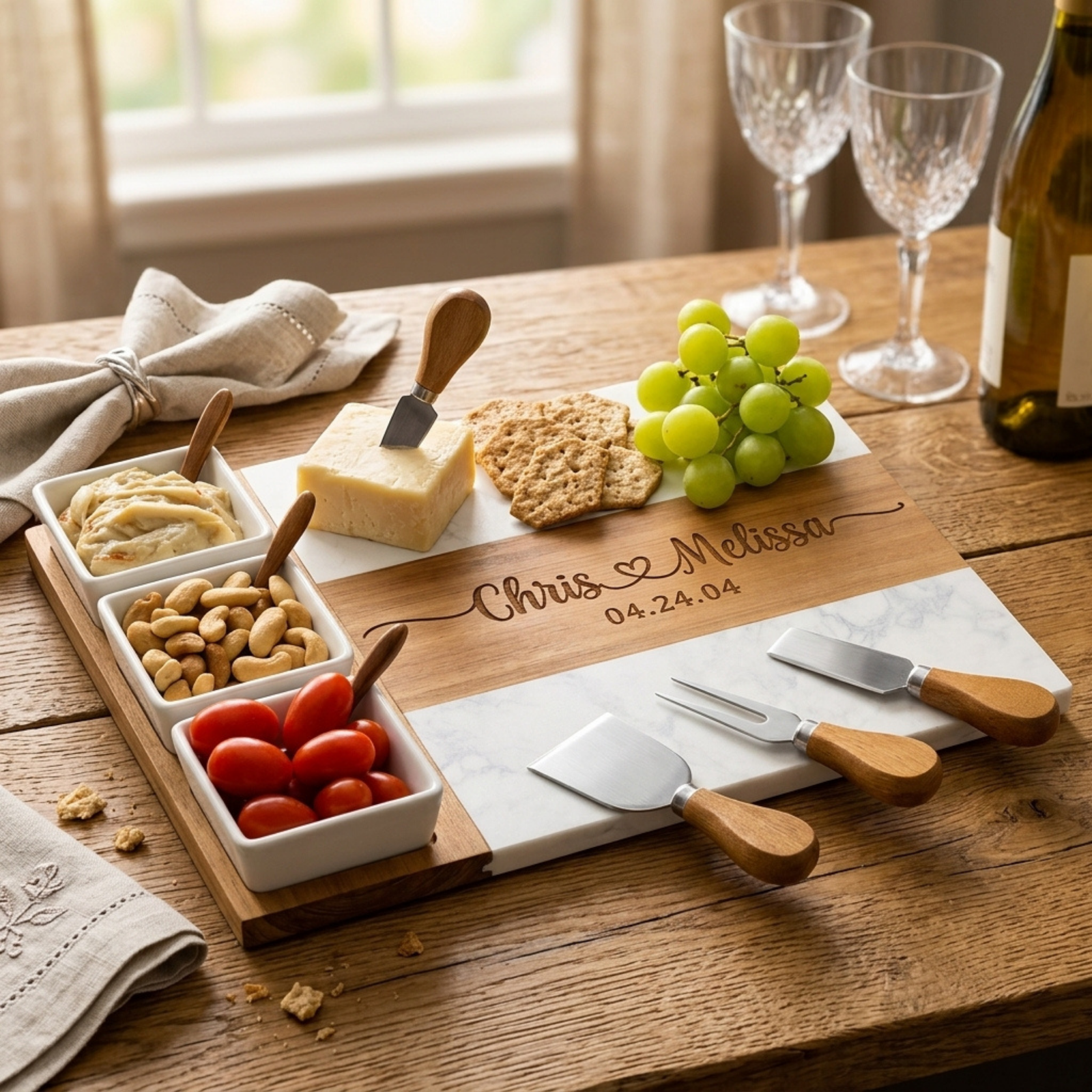
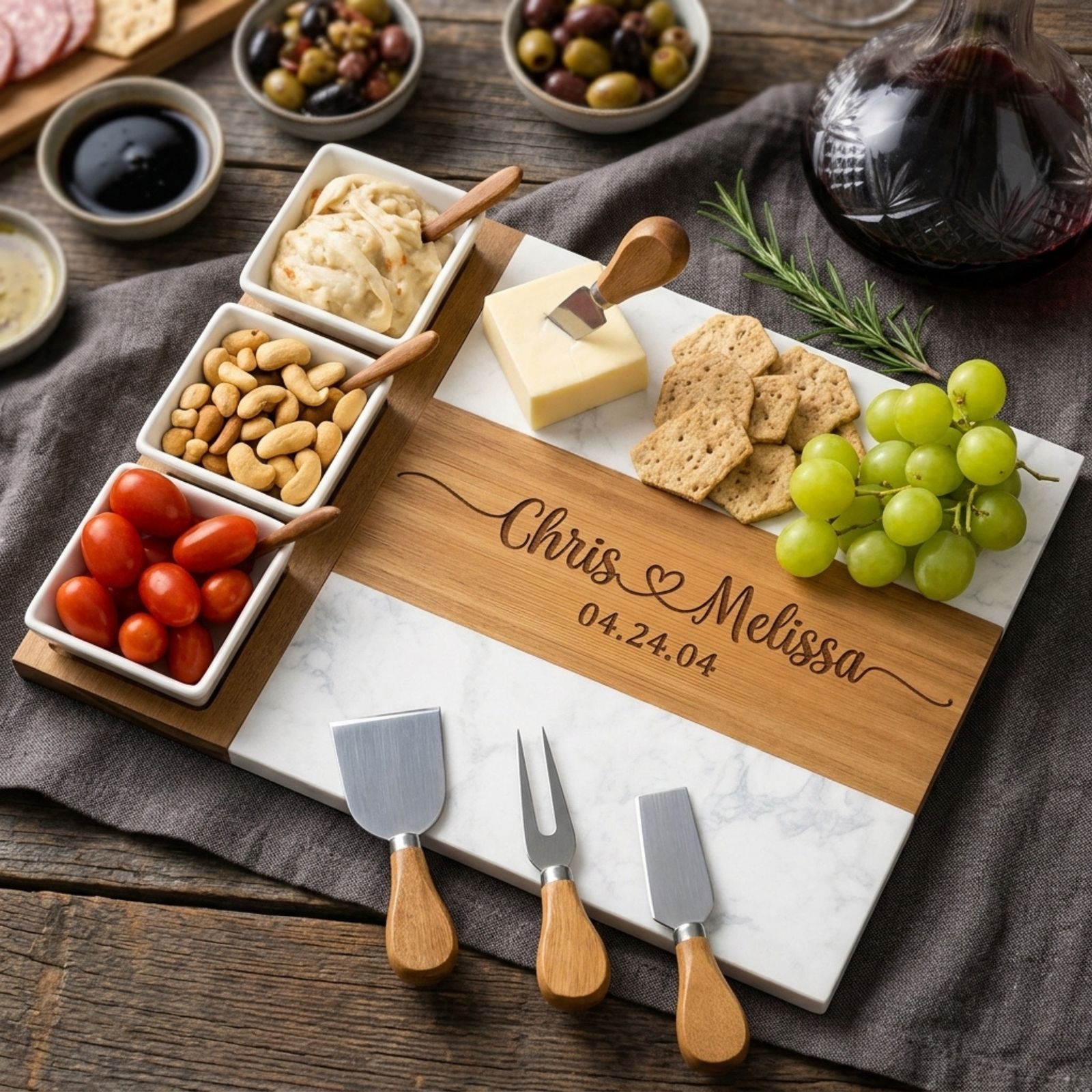
Marble and wood charcuterie board engraved Chris and Melissa 04.24.04 with cheese knives, grapes, crackers and ceramic dip bowls on a sunny table
23 Breakfast and Brunch Charcuterie Board Ideas for Every Kind of Morning

by Colin Raymond August 31, 2026

Twenty one breakfast and brunch charcuterie board ideas, from family-style spreads and mimosa bars to make-ahead tips and a full price guide. Real personalized boards from Willow & Hive included in every occasion. 

Read More